



Trifluoroacetic Acid
Zouping Jinxing Chemical Co., Ltd. is one of the leading manufacturers and suppliers of trifluoroacetic acid in China. If you're going to wholesale bulk trifluoroacetic acid made in China, welcome to get free sample from our factory. All customized products are with high quality and low price.
Key physicochemical properties
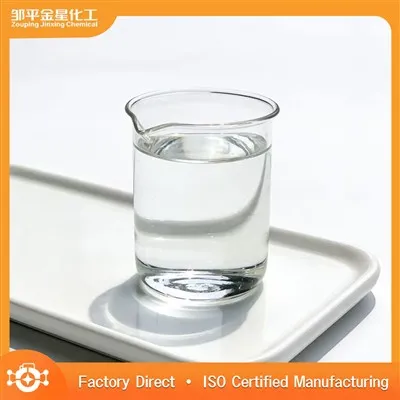
Appearance: Trifluoroacetic Acid is a colorless, fuming liquid with a pungent vinegar-like odor (much sharper than acetic acid); highly hygroscopic.
Boiling point: 72.4 °C; Melting point: −15.4 °C.
Density: 1.489 g/cm³ (25 °C).
Flash point: None (non-flammable, but decomposes at high temperatures to release highly toxic substances such as phosgene, HF, and COF₂).
Acidity: pKa ≈ 0.23; approximately 10⁴ times stronger than acetic acid (4.76), approaching the strength of strong inorganic acids; the strong electron-withdrawing effect of the CF₃ group makes the carboxyl carbon highly susceptible to nucleophilic attack.
Solubility: Miscible in all proportions with water, methanol, acetonitrile, DCM, and DMF; insoluble in non-polar alkanes.
Special characteristics: A volatile strong acid (can be removed via rotary evaporation along with the solvent); does not oxidize organic compounds (unlike concentrated sulfuric acid or nitric acid).
Primary Uses
Peptide cleavage: Trifluoroacetic Acid is the standard cleavage acid in the Boc strategy (used with scavengers like EDT and anisole) to detach the peptide from the resin without breaking peptide bonds.
HPLC mobile phase: 0.05–0.1% TFA is used to adjust pH, suppress silanol interactions, and sharpen peak shapes (despite being harsh on columns and incompatible with MS, it remains standard for reversed-phase HPLC).
Organic synthesis: Catalyzes esterification/acetalization; removes Boc groups (TFA/DCM); serves as a proton source for cyclization; used to introduce trifluoroacetyl protecting groups (–NHCOCF₃).
Proteomics: Preferred for acidifying samples after enzymatic digestion; compatible with mass spectrometry sample preparation.
Industry: Intermediate for fluorinated agrochemicals and pharmaceuticals; liquid crystal materials; raw material for trifluoroacetic anhydride (TFAA).
Safety, Storage, and Transportation
GHS: H314 Causes severe skin burns and eye damage (Category 1); H335 May cause respiratory irritation; reacts violently with water, releasing heat; decomposes at high temperatures to release HF and phosgene-like substances.
Skin contact with liquid → deep chemical burns (penetrates more deeply than sulfuric acid due to low molecular weight); vapor inhalation → coughing, pulmonary edema.
Handling: Use a fume hood; wear a face shield, nitrile gloves (do not use latex, as TFA permeates it), and a lab coat; use a pipette for small volumes; mouth pipetting is strictly prohibited.
Neutralizing spills: First absorb with sand/inert material, then slowly neutralize with sodium bicarbonate or limewater; never pour large amounts of water directly (risk of violent boiling and splashing).
Storage/Transport: Use glass bottles or PTFE-lined drums; seal tightly to prevent moisture ingress; store at room temperature (avoid prolonged exposure above 40°C); keep separate from bases, oxidizing agents, and amines; stock HF first-aid medication (calcium gluconate gel) in the storage area.
Firefighting: Non-flammable itself, but containers may explode when heated; use CO₂ or dry chemical extinguishers; firefighters must take precautions against HF fumes.
FAQ
Q: What is your standard package for TFA?
A: Professional corrosion-resistant packaging for dangerous goods.
Q: Can you provide full export documents?
A: Yes, we supply SDS, COA and dangerous goods shipping documents.
Q: What are the main applications of Trifluoroacetic Acid?
A: Widely used in pharmaceutical synthesis, peptide synthesis and fine chemical reaction catalyst.
Hot Tags: trifluoroacetic acid, China trifluoroacetic acid manufacturers, suppliers, factories, Anhydrous Ethanol, anhydrous ethanol sds, aniline glacial acetic acid, butyl acetate acetone, chlorobenzene and benzyl chloride, dimethyl acetal acetone
Previous
NitrobenzeneNext
N-ValeraldehydeYou Might Also Like



Send Inquiry