



Nitrobenzene
Zouping Jinxing Chemical Co., Ltd. is one of the leading manufacturers and suppliers of nitrobenzene in China. If you're going to wholesale bulk nitrobenzene made in China, welcome to get free sample from our factory. All customized products are with high quality and low price.
Key physicochemical properties
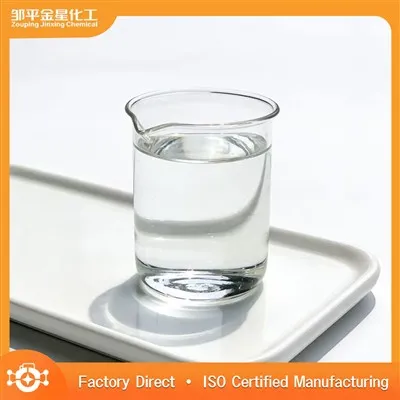
Appearance: Nitrobenzene is a pale yellow to colorless oily liquid; the pure substance is nearly colorless, whereas the technical-grade product appears yellow-green due to the presence of dinitrobenzene; it has a characteristic odor of bitter almonds.
Boiling point: 210.8°C; Melting point: 5.7°C (crystallizes at low temperatures).
Density: 1.198 g/cm³ (at 25°C); heavier than water.
Flash point: Approx. 88°C (closed cup) → Combustible liquid (GHS Category 4 flammable liquid, but difficult to ignite).
Vapor pressure: Approx. 0.25 mmHg at 25°C; evaporates slowly, but the vapor is 4.2 times heavier than air and tends to spread along the ground.
Solubility: Slightly soluble in water (0.19 g/100 mL at 20°C); miscible with ethanol, diethyl ether, benzene, chloroform, and acetone; serves as an excellent solvent for many organic substances.
Stability: Relatively stable under normal conditions, but hazardous when exposed to high temperatures, open flames, or strong reducing agents; undergoes sulfonation upon prolonged contact with strong acids.
Chemical behavior
Resistant to oxidation and electrophilic substitution: The –NO₂ group is strongly electron-withdrawing, deactivating the benzene ring; halogenation or nitration requires harsh conditions.
Typical reduction: Under conditions such as Fe/HCl, Sn/HCl, or H₂/Pd → aniline (its primary industrial use is the production of aniline).
Birch reduction: Liquid ammonia/alkali metal → 1,4-dihydrobenzene derivatives.
Free-radical reactions: Can act as an electron acceptor, participating in SET processes; serves as a sensitizer in certain photochemical reactions.
Primary Uses
Aniline production: Over 90% of global nitrobenzene is used for catalytic hydrogenation to produce aniline (for MDI, rubber additives, and dye precursors).
Solvent: Formerly used as a solvent for natural rubber, resins, and fatty acids; largely replaced now due to toxicity.
Flavoring: Used in very small quantities to mimic the aroma of bitter almonds or cherries (now largely banned in food products and replaced by safe alternatives like synthetic benzylidene acetone).
Organic synthesis intermediate: Nitrobenzene can be used to synthesize p-aminophenol (a raw material for paracetamol), azo dyes, and quinoline alkaloids.
Safety, Storage, and Transportation
GHS: H301 Toxic if swallowed; H311 Toxic in contact with skin; H331 Toxic if inhaled; H373 May cause liver damage through prolonged exposure; H411 Toxic to aquatic life with long-lasting effects.
Toxicological mechanism: Metabolically reduced (especially via dermal absorption) to aniline derivatives, oxidizing hemoglobin to methemoglobin (MetHb) and causing loss of oxygen-carrying capacity → cyanosis, dyspnea, methemoglobinemia; also causes liver damage, hemolysis, and CNS depression.
Acute toxicity: Rat oral LD50 ~590 mg/kg (toxic; not extremely toxic, but certainly not to be underestimated); dermal absorption is the primary route of occupational poisoning-avoid rubbing the back of the hand against it even when wearing gloves.
Handling: Use fume hoods and fully enclosed transfer systems; wear nitrile gloves (check regularly for damage), safety goggles, and a respirator (with organic vapor cartridges); do not heat in open vessels.
Storage & Transport: Store in sealed containers away from light at <40°C; keep away from strong reducing agents (e.g., zinc dust, sodium dithionite), strong acids (exothermic reaction upon contact), and ignition sources; absorb spills with sand or earth; prevent entry into sewers (due to persistent aquatic toxicity).
Firefighting: Use foam, CO₂, or dry chemical; combustion produces toxic NOx fumes; firefighters require SCBA.
FAQ
Q: Toxicity and Occupational Health
A: Classic Toxicology: Dermal/inhalation exposure → methemoglobinemia (cyanosis); this presentation is more characteristic than that of chloronitrobenzene.
Acute: Inhalation of high-concentration vapors causes headache, dizziness, nausea, and dyspnea, with cyanosis of the lips and fingernails; severe cases may lead to coma or death. Absorption via skin is rapid and can occur through intact skin; liquid splashes to the eyes cause corneal burns.
Chronic: Long-term low-concentration exposure leads to anemia, hepatomegaly, neurasthenia, and dermatitis; some data suggest mutagenic potential.
LD₅₀ (rat, oral): Approx. 489 mg/kg (moderately toxic); rabbit dermal LD₅₀ is approx. 2100 mg/kg, though actual toxicity via dermal absorption is far greater than this figure suggests.
Carcinogenicity: Classified as Group 2B (possibly carcinogenic to humans) by IARC; designated A3 (confirmed animal carcinogen with unknown relevance to humans) by ACGIH; regulated as an occupational carcinogen by NIOSH.
Occupational Exposure Limits:
China GBZ 2.1: PC-TWA 2 mg/m³ (Skin), PC-STEL 5 mg/m³
ACGIH TLV-TWA: 1 ppm (5 mg/m³, Skin)
OSHA PEL: 1 ppm (5 mg/m³, Skin); NIOSH IDLH: 200 mg/m³
Alcohol consumption exacerbates poisoning (ethanol promotes nitro-reduction); strict prohibition of alcohol in the workplace.
Q: Key Points for Handling and Storage
A: Key measures focus on preventing percutaneous absorption and vapor accumulation: utilize enclosed operations, local exhaust ventilation combined with general ventilation, and real-time monitoring of airborne concentrations.
PPE: Butyl rubber gloves (preferred; nitrile offers limited protection), chemical-resistant suits, goggles plus face shields, and organic vapor respirators (or SCBA for high concentrations); bare-handed contact is strictly prohibited; work clothing must be laundered separately.
Storage: Store in a sealed, cool, ventilated, and explosion-proof facility (≤30°C); keep away from strong oxidizers (e.g., nitric acid, peroxides), strong reducing agents, strong bases, and food or feed; avoid direct sunlight.
Leakage response: Absorb with sand, soil, or vermiculite; for large spills, construct dikes and transfer the material to dedicated containers using explosion-proof pumps; do not flush with water (as the substance may sink and spread); dispose of via incineration as nitrogen-containing organic hazardous waste (with flue gas NOx removal).
Firefighting: Use water mist, alcohol-resistant foam, dry chemical powder, or CO₂; thermal decomposition produces NOx and CO, requiring firefighters to wear SCBA.
Hot Tags: nitrobenzene, China nitrobenzene manufacturers, suppliers, factories, anhydrous tetrahydrofuran thf, aniline glacial acetic acid, Industrial Grade High Active Trimethyl Chlorosilane, Industrial grade High purity Tetrahydrofuran Thf, Low toxicity Environmentally Friendly Xylene, n butanol azeotrope
Previous
P-CumylphenolYou Might Also Like



Send Inquiry