



Dichloroacetic Acid
Zouping Jinxing Chemical Co., Ltd. is one of the leading manufacturers and suppliers of dichloroacetic acid in China. If you're going to wholesale bulk dichloroacetic acid made in China, welcome to get free sample from our factory. All customized products are with high quality and low price.
Basic properties
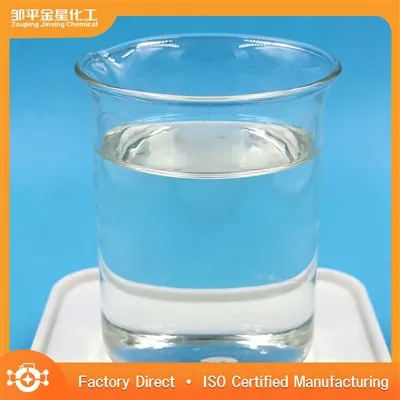
Appearance: Dichloroacetic acid is a colorless to pale yellow liquid with a pungent, acidic odor.
Melting point: Approximately 9–10 °C; Boiling point: Approximately 194 °C (decomposes).
Strong organic acid (pKa ≈ 1.3), readily soluble in water, ethanol, and ether.
Highly corrosive; irritating and burn-inducing to skin and mucous membranes.
Main uses
Chemical intermediates: Used in the synthesis of pharmaceuticals, dyes, and organic reagents.
Pharmaceutical research: Sodium dichloroacetate (DCA sodium salt) is being studied in the laboratory for:
Inhibiting pyruvate dehydrogenase kinase (PDK), altering cancer cell metabolism, and
Treatment of hereditary mitochondrial diseases, lactic acidosis, etc. (mostly in experimental or small-scale clinical stages, not mainstream standard therapy).
Water treatment byproduct: Dichloroacetic acid may be generated during chlorination disinfection of drinking water. It belongs to the haloacetic acid disinfection byproduct class and poses potential health risks; its content needs to be monitored.
Safety and toxicity.
Safety and toxicity
It is corrosive; acid-resistant gloves and safety goggles must be worn during handling, and the process should be carried out in a fume hood.
Animal studies have shown that long-term high doses can cause liver and kidney damage, and some studies suggest it may be carcinogenic (IARC classifies it as Group 2B, possibly carcinogenic to humans).
Limits in drinking water are regulated by the "Standards for Drinking Water Quality" (e.g., GB 5749 specifies a limit of 0.05 mg/L for dichloroacetic acid).
FAQ
Q: Toxicity and Occupational Health
A:Moderate acute toxicity but highly corrosive: Oral LD₅₀ in rats is 2820 mg/kg; dermal LD₅₀ in rabbits is 510 mg/kg; classified as low toxicity via oral route, but causes Category 1A skin/eye corrosion.
Core hazards: Strong corrosivity + keratolysis; skin contact causes severe burns and ulcers; eye contact can lead to permanent corneal damage or even blindness; vapor inhalation causes pulmonary edema (delayed onset).
⚠️ Reproductive and genetic toxicity (risks beyond those of formic acid):
Mutagenicity: Positive results in mouse micronucleus tests, DNA damage assays, and lymphocyte mutation tests.
Teratogenicity: In pregnant rats, 4 g/kg causes cardiovascular malformations, and 14 g/kg causes urogenital malformations.
IARC Group 2B (possibly carcinogenic to humans); ACGIH designation A3.
Occupational exposure limits:
China MAC: 4 mg/m³ (Skin) (limit is more than twice as strict as that for formic acid).
ACGIH TLV-TWA: 0.5 ppm (Skin, A3).
GHS Label: Danger; H290 (Corrosive to metals) + H311 (Toxic in contact with skin) + H314 (Causes severe skin burns and eye damage) + H351 (Suspected of causing genetic defects) + H360FD (May damage fertility; May damage the unborn child) + H362 (May cause harm to breast-fed children) + H373 (May cause damage to organs through prolonged or repeated exposure) + H400 (Very toxic to aquatic life).
Q: Key Points for Handling and Storage
A: Use enclosed operations and local exhaust ventilation to prevent vapor accumulation (vapors are 4.5 times heavier than air and tend to collect in low-lying areas);
PPE: Acid-resistant butyl rubber gloves, acid-resistant protective clothing, goggles plus face shield, and half-mask respirator (with acid gas cartridge); bare-handed handling is strictly prohibited; launder work clothes separately;
Storage: Store in a cool, well-ventilated warehouse (≤30°C); keep away from strong oxidizers, strong bases, and strong reducing agents (reacts violently with bases, releasing heat; reacts with metals to release H₂);
Leakage handling: Absorb small spills with dry sand or vermiculite; for large spills, neutralize with limestone (CaCO₃), soda ash (Na₂CO₃), or quicklime (CaO) before collection; dispose of as chlorinated organic hazardous waste via a qualified incineration facility (with flue gas HCl removal);
Firefighting: Use dry powder, CO₂, alcohol-resistant foam, or water spray (to cool containers); avoid high-pressure water jets that could spread the corrosive material.
Hot Tags: dichloroacetic acid, China dichloroacetic acid manufacturers, suppliers, factories, 4 methyl catechol dimethyl acetate, acid hydrolysis of butyl acetate, aspirin solubility in dichloromethane, benzaldehyde dimethyl acetate, ethyl dimethyl acetate, tetrahydrofuran thf and cyclohexanone
Previous
Formic AcidYou Might Also Like



Send Inquiry