



Styrene
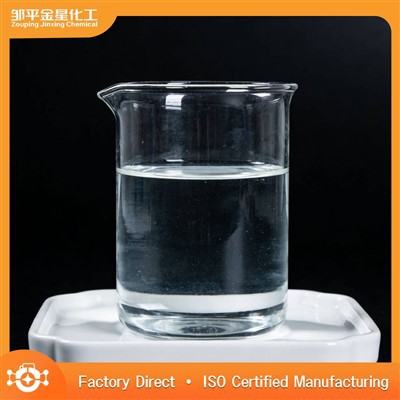
Zouping Jinxing Chemical Co., Ltd. is one of the leading manufacturers and suppliers of styrene in China. If you're going to wholesale bulk styrene made in China, welcome to get free sample from our factory. All customized products are with high quality and low price.
Physicochemical properties
Physical parameters: Melting point approximately -30.6℃, boiling point approximately 145.2℃, density 0.906 g/cm³ (20℃). Insoluble in water, readily soluble in most organic solvents such as ethanol, ether, and acetone.
Flammable properties: Flash point 31℃ (closed cup); vapor can form an explosive mixture with air, with explosion limits of 1.1%~8.9% (volume ratio).
Self-polymerization tendency: Chemically extremely reactive, readily undergoing free radical polymerization under heating, light, or in the presence of peroxides. It also slowly self-polymerizes at room temperature; therefore, polymerization inhibitors (such as TBC, p-tert-butylcatechol) must be added during storage and transportation.
Core uses and downstream products
Polystyrene (PS) is a homopolymer of styrene and includes general grade (GPPS) and high-impact grade (HIPS). It is widely used in appliance housings, daily necessities, food packaging, and optical instruments.
Expanded polystyrene (EPS) contains polystyrene beads containing physical foaming agents. When heated, they expand to form a closed-cell foam structure. EPS is mainly used in building exterior wall insulation boards, cushioning and shockproof packaging, and disposable foam tableware.
ABS resin, an acrylonitrile-butadiene-styrene copolymer, possesses excellent mechanical strength, toughness, and processing properties, making it an important material for automotive interiors, high-end appliance casings, and Lego bricks.
Styrene-butadiene rubber (SBR) is a copolymer of styrene and butadiene. It is the most produced type of synthetic rubber and is mainly used to manufacture automobile tires, belts, hoses, as well as styrene-butadiene latex for papermaking and coatings.
Safety and toxicity protection
Health Hazards: Irritating to eyes, skin, and respiratory tract; inhalation of high concentrations has an anesthetic effect. Long-term exposure may damage the nervous system, liver, and kidneys. The International Agency for Research on Cancer (IARC) classifies it as a Group 2A carcinogen (probably carcinogenic to humans).
Leakage Emergency Response: Immediately evacuate personnel from the contaminated area to an upwind location and isolate the area. Small leaks should be absorbed with dry sand or other non-combustible materials; large leaks must be contained by constructing dikes and transferred to tank trucks or specialized collection containers using explosion-proof pumps.
Firefighting Methods: Firefighters must operate from protected shelters. Use alcohol-resistant foam, dry powder, carbon dioxide, or sand to extinguish the fire. Do not use direct water flow to extinguish the fire, as this may cause flowing fires or splashes.
FAQ
Q: Toxicity and Occupational Health
A:Acute toxicity: Rat oral LD₅₀ approx. 5000 mg/kg (low to moderate); mouse inhalation LC₅₀ approx. 1000 ppm·h; high concentrations cause dizziness, drowsiness, nausea, and coma.
Chronic target organs: Long-term exposure damages the central nervous system (color vision abnormalities, hearing loss, cognitive decline), liver, and hematopoietic system; symptoms are collectively termed "styrene disease."
⚠️ Carcinogenicity classification (this is the most commonly misunderstood point):
Styrene itself: IARC Group 2B (possibly carcinogenic to humans); primarily associated with myeloid leukemia and lymphoma.
Styrene-7,8-oxide (major in vivo metabolite and industrial impurity): IARC Group 2A (probably carcinogenic to humans); stronger evidence.
Occupational exposure limits (global trend toward stricter limits):
OSHA PEL: TWA 100 ppm, STEL 200 ppm
NIOSH REL: TWA 50 ppm, STEL 100 ppm
ACGIH TLV: TWA 10 ppm, STEL 20 ppm (significantly tightened since 2020)
IDLH: 700 ppm
GHS Label: Danger; H226 (Flammable) + H332 (Harmful if inhaled) + H315/H319 (Skin/eye irritation) + H335 (Respiratory irritation) + H351 (Suspected of causing cancer) + H361 (Reproductive toxicity) + H372 (Organ damage from prolonged exposure) + H304 (Fatal if swallowed and enters airways) + H412 (Harmful to aquatic life with long-lasting effects).
Q: Key Points for Handling and Storage
A: Use a fume hood, explosion-proof electrical equipment, and local exhaust ventilation; open flames and sparks are prohibited;
PPE: Nitrile gloves, safety goggles plus face shield, half-face respirator (organic vapor cartridge); SCBA required for high concentrations;
Storage: Cool (≤25°C), protected from light, nitrogen blanket; keep separate from oxidizing agents, strong acids, and strong bases;
Spills: Absorb and collect using sand, soil, or vermiculite; do not flush into sewers (highly toxic to aquatic life, H412); dispose of as flammable, benzene-containing hazardous waste;
Firefighting: Dry chemical, CO₂, or alcohol-resistant foam; wear SCBA (combustion produces benzaldehyde, styrene oxide, and CO).
Q: Storage and Transportation Safety
A: Styrene presents a unique set of risks that distinguish it from ordinary flammable liquids: It undergoes slow spontaneous polymerization at ambient temperatures; the polymerization rate rises exponentially above 60°C, and at temperatures exceeding 100°C, the reaction becomes violently exothermic, potentially leading to runaway polymerization, overpressurization, and equipment rupture. The addition of a polymerization inhibitor is mandatory: TBC (p-tert-butylcatechol) is the industry standard (typically 10–15 ppm) and is required by the GB/T 3915-2021 standard. ⚠️ Oxygen is a double-edged sword: TBC requires oxygen to inhibit polymerization (becoming effective only at levels above 10–15 ppm), yet an excess of oxygen leads to the formation of peroxide-based polymers, which act as new initiation sources-this was the mechanism behind the 2021 butadiene deflagration accident at Nanjing Yangzi Petrochemical. The rate of TBC consumption surges with temperature: at 25°C, 1 ppm of TBC lasts for 11 days, whereas at 40°C, it lasts only 1.5 days. Three key storage requirements: temperature ≤25°C (ideally below 15°C), nitrogen blanketing to control oxygen levels (maintaining gas-phase O₂ at 5–10 vol%), and online monitoring of TBC concentration. Exposure to light, metal ions (Fe³⁺, Cu²⁺), and moisture accelerates polymerization.
Hot Tags: styrene, China styrene manufacturers, suppliers, factories, 1 3 dimethylene, anhydrous ethanol alcohol, butyl acetate ethyl acetate thinner, chlorobenzene and benzyl chloride, chloromethyl trimethylsilane, methyl acetate bottle
Previous
Polystyrene-535Next
IsobutanolYou Might Also Like




Send Inquiry