



Silicon Tetrachloride
Zouping Jinxing Chemical Co., Ltd. is one of the leading manufacturers and suppliers of silicon tetrachloride in China. If you're going to wholesale bulk silicon tetrachloride made in China, welcome to get free sample from our factory. All customized products are with high quality and low price.
Basic physical properties
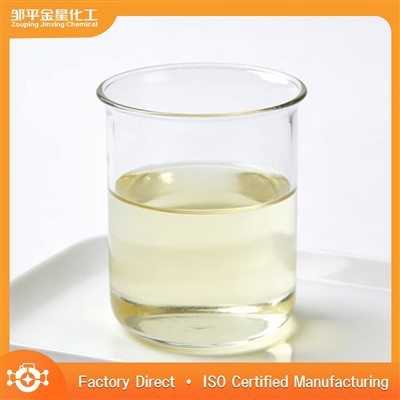
Appearance: Silicon tetrachloride is a colorless, transparent, fuming liquid-slightly yellowish if impure-with a pungent, suffocating odor.
Melting point / Boiling point: −70°C / 57.6°C
Density: 1.48–1.483 g/cm³ (at 20°C)
Vapor density (air = 1): 5.86 (heavy vapor; tends to hug the ground)
Vapor pressure: ~23 kPa at 20°C; ~56 kPa at 37.8°C
Solubility: Soluble in benzene, chloroform, petroleum ether, and CCl₄; undergoes violent hydrolysis upon contact with water or alcohols
Molecular structure: Regular tetrahedral; non-polar molecule (net dipole moment = 0)
Flammability:Silicon tetrachloride is non-flammable (classified as non-flammable under UN/ECSC standards). However, its exothermic reaction with water can cause containers to rupture, potentially triggering a secondary fire or explosion.
Industrial source
Polysilicon by-product: Production via the Siemens process generates approximately 10–15 kg of SiCl₄ for every 1 kg of polysilicon; while formerly a disposal challenge, it is now typically converted back into TCS via hydrogenation units for closed-loop utilization.
Direct chlorination: Produced by reacting silicon powder with chlorine gas at 400–500°C (Si + 2Cl₂ → SiCl₄).
High-purity processing: Industrial-grade material undergoes multi-column vacuum distillation, molecular sieve adsorption, and 0.05 μm filtration to achieve 5N, 6N, or 7N purity levels.
FAQ
Q: Toxicity and Occupational Health
A:Rat oral LD₅₀ is approximately 700–800 mg/kg (moderately toxic); inhalation LC₅₀ is approximately 1000 ppm·h;
The primary risk is HCl-induced corrosion rather than systemic toxicity: severe burns to the eyes and respiratory tract, delayed pulmonary edema (manifesting after several hours), and deep chemical burns from skin or eye contact;
GHS classification: Warning (not Danger); H314 (severe skin/eye corrosion) + H335 (respiratory irritation) + H290 (corrosive to metals)-note the absence of H330/H331 (fatal/toxic if inhaled) hazard statements, as it is not classified as a toxic gas;
No IARC carcinogenicity classification, though long-term exposure to HCl causes dental erosion and chronic bronchitis.
Q: Key Points for Handling and Storage
A: Fully sealed stainless steel system with N₂/He purging; moisture prevention is critical (SiCl₄ is more moisture-sensitive than TCS, yielding 1.33 times the amount of HCl upon hydrolysis). Store cylinders/drums in a cool, dry, well-ventilated warehouse (≤30°C); secure in an upright position; maintain residual pressure to prevent back-sucking; keep isolated (≥50 m) from water, alkalis, alcohols, amines, oxidizers, and foodstuffs. PPE: Level A chemical-protective suit and SCBA for leak handling; full-face respirator, acid-resistant (butyl) gloves, and goggles for routine inspections; bare-handed handling is strictly prohibited. Firefighting: Use dry powder, CO₂, dry sand, or dry lime; water and foam are strictly prohibited (contact with water causes violent release of white HCl fumes); cool the cylinder exterior during a fire. Leakage control: Absorb spills with dry sand or vermiculite; neutralize off-gas HCl remotely using alkaline solutions (limewater/soda solution); prevent entry into sewers.
Hot Tags: silicon tetrachloride, China silicon tetrachloride manufacturers, suppliers, factories, anhydrous ethanol alcohol, aspirin solubility in dichloromethane, bromomethane chloromethane dichloromethane, epichlorohydrin amine, Industrial grade High purity Dimethyl Sulfoxide, toluene ace hardware
Next
Formic AcidYou Might Also Like




Send Inquiry