



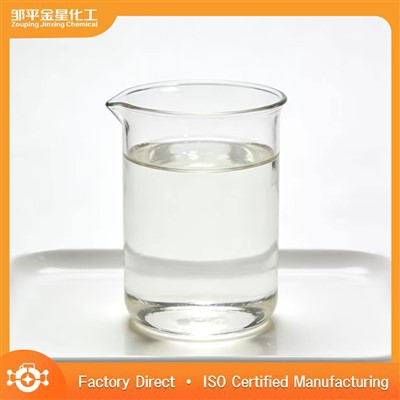
Chlorobenzene
Zouping Jinxing Chemical Co., Ltd. is one of the leading manufacturers and suppliers of chlorobenzene in China. If you're going to wholesale bulk chlorobenzene made in China, welcome to get free sample from our factory. All customized products are with high quality and low price.
Primary Uses
Key raw material for organic synthesis (accounting for over 80%):
Nitration: Produces p-chloronitrobenzene and o-chloronitrobenzene, which are subsequently used to manufacture paracetamol, carbendazim, and dyes.
Hydrolysis: Chlorobenzene undergoes catalytic hydrolysis at high temperature and high pressure to produce phenol.
Ammonolysis: Reaction with liquid ammonia under high temperature and high pressure to produce aniline, used in the manufacture of polyurethane (MDI) and rubber additives.
High-boiling industrial solvent: Used to dissolve natural resins, synthetic resins, rubber, oils, fats, and waxes; commonly used in specialty coatings, inks, and adhesives.
Safety and Toxicology
Toxicity: Chlorobenzene has moderate toxicity.; can be absorbed via the respiratory tract and skin. It exerts an inhibitory and anesthetic effect on the central nervous system; long-term exposure may cause liver and kidney damage.
Occupational exposure limits: In China, the PC-TWA is 50 mg/m³ and the PC-STEL is 100 mg/m³.
Fire and explosion hazards: Explosive limits are 1.3%–11% (v/v); vapors are heavier than air, and the substance is highly flammable and prone to explosion when exposed to open flames or high heat.
Protection requirements: Conduct operations in a closed system with local exhaust ventilation; wear a self-priming filter-type respirator, chemical safety goggles, and oil-resistant rubber gloves.
FAQ
Q: Toxicity and Health Hazards
A: Acute: Inhalation of high concentrations causes dizziness, drowsiness, nausea, anesthetic effects, or even coma; liquid irritates skin/eyes; repeated contact may cause defatting and erythema; Chronic: Long-term exposure damages the liver and kidneys and causes symptoms of neurasthenia; classified by ACGIH as A3 (evidence of animal carcinogenicity, relevance to humans undetermined); not listed as a carcinogen by the EPA; LD₅₀ (rat, oral): Approx. 2–4 g/kg (low to moderate toxicity); Occupational exposure limits: China PC-TWA 50 mg/m³ (≈10 ppm); ACGIH TLV-TWA 10 ppm; OSHA PEL 75 ppm (legacy standard).
Q: Key Points for Handling and Storage
A: Use enclosed operations combined with local exhaust or explosion-proof ventilation; install vapor alarms. PPE: Solvent-resistant gloves (butyl or Viton; nitrile is generally unsuitable), safety goggles, and a half-face respirator (for organic vapors); wash skin immediately with soap and water if contact occurs. Store in a cool, well-ventilated warehouse (≤30°C); keep away from open flames, oxidizing agents (reacts violently with silver perchlorate and dimethyl sulfoxide), and strong bases. Ensure anti-static grounding; collect spills using sand or inert absorbent materials; prevent entry into sewers (substance is poorly biodegradable and contaminates groundwater).
Hot Tags: chlorobenzene, China chlorobenzene manufacturers, suppliers, factories, 4 methyl catechol dimethyl acetate, anhydrous tetrahydrofuran thf, dimethyl sulfoxide dmso cream, High Purity Industrial Grade Chlorobenzene, Industrial Grade High solubility 95 Ethanol, Methyl Tertbutyl Ether
Previous
Methyl Tert-butyl EtherNext
DichloroethaneYou Might Also Like


Send Inquiry