



Titanium Tetrachloride
Zouping Jinxing Chemical Co., Ltd. is one of the leading manufacturers and suppliers of titanium tetrachloride in China. If you're going to wholesale bulk titanium tetrachloride made in China, welcome to get free sample from our factory. All customized products are with high quality and low price.
Physicochemical properties
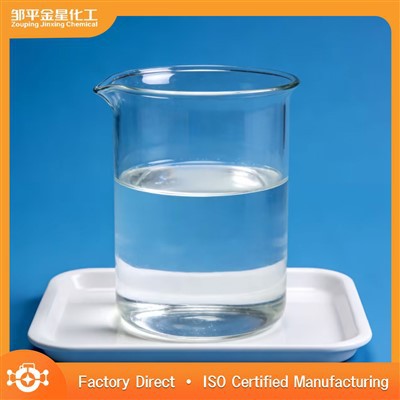
Physical state: Liquid (25℃), melting point -23.2℃, boiling point 136.4℃
Density: Approximately 1.726 g/cm³ (20℃)
Volatileness: Titanium tetrachloride is highly volatile and has a high vapor pressure; it undergoes immediate hydrolysis upon contact with moist air, producing TiO₂·xH₂O (white smoke and HCl acid mist)-a classic "smoking" phenomenon.
Solubility: Soluble in aprotic organic solvents (CCl₄, CH₂Cl₂, toluene, hexane, etc.); reacts violently with water and alcohols.
Coordination chemistry: Lewis acid, strong acceptor; forms adducts TiCl₄·2L with ethers, amines, and phosphines; reduction yields TiCl₃.
Stability: Stable under anhydrous and oxygen-free conditions; may turn yellow under light but does not decompose.
Core Uses
Titanium Dioxide (Chlorination Process Titanium Dioxide)
Globally, over 80% of TiCl₄ is used for oxidation to produce rutile TiO₂ pigments:
TiCl₄ + O₂ → TiO₂ + 2Cl₂ (Gas-phase oxidation, around 1500℃)
This is the mainstream process for high-end coatings, plastics, and papermaking titanium dioxide.
Titanium Metal Smelting
Kroll process reduction to produce sponge titanium:
TiCl₄ + 2Mg → Ti + 2MgCl₂ (Argon protection, 800–900℃)
This is the source of aerospace-grade titanium materials.
Olefin Polymerization Catalyst
A key component of the Ziegler–Natta system; used in conjunction with MgCl₂ support, internal electron donor, and AlR₃ co-catalyst to produce PP/PE. Also used as a precursor in metallocene catalytic systems.
Vapor deposition and surface treatment: Thermal CVD titanium plating, titanium diffusion, or hydrolysis to produce nano-TiO₂ thin films; Hydrophobic/wear-resistant treatment of glass and ceramic surfaces (hydrolysis film formation); Anti-counterfeiting "smoke" demonstrations, military smokescreens (historical applications); Organic synthesis: Lewis acid catalysts: aldehyde-alcohol condensation, Diels-Alder, Friedel-Crafts acylation; however, they are highly corrosive and are now mostly replaced by Ti(OiPr)₄, TMSCl, etc.
Safety and Storage
Titanium tetrachloride is extremely dangerous: Anhydrous TiCl₄ is non-flammable, but reacts with water to release a large amount of heat and HCl, which can ignite flammable materials; vapors irritate the respiratory tract and cause pulmonary edema.
GHS: Corrosive (Skin Corr 1B), Acute Toxicity (Acute Tox 4), Specific Target Organ Toxicity (STOT SE 3)
Storage: Store in dry nitrogen/argon sealed steel cylinders or passivated containers, absolutely waterproof; warehouse humidity <30%, keep away from alkalis, water, and alcohol.
Leakage: Wear a self-contained breathing apparatus, absorb with dry sand/vermiculite, do not spray water; for large leaks, construct dikes, absorb HCl exhaust with alkaline solution.
Fire Extinguishing: Use dry powder, dry sand, or CO₂ for fires; do not use water or foam.
FAQ
Q: Toxicity and Occupational Health
A:Acute toxicology data:
Rat oral LD₅₀: 464 mg/kg (moderately toxic)
Rat inhalation LC₅₀: 400 mg/m³
Mouse inhalation LC₅₀: 100 mg/m³ (2 h)
Rabbit dermal LD₅₀: 3160 mg/kg
Core mechanism: Upon contact with moisture in the respiratory tract, the fumes generate HCl and titanium oxides, causing severe irritation and delayed pulmonary edema (onset up to 36 hours);
Skin contact: Causes severe chemical burns, leaving residual yellow pigmentation upon healing;
Chronic effects: Long-term low-concentration exposure leads to chronic bronchitis, pleural thickening, and reduced lung function;
IARC: Not classified as a carcinogen, though long-term occupational exposure is clearly linked to respiratory diseases;
GHS: Danger; H314 (Severe skin/eye corrosion 1B) + H330 (Fatal if inhaled) + H335 (Respiratory irritation) + EUH014 (Reacts violently with water).
Q: Key Points for Handling and Storage
A: Fully enclosed system + local exhaust ventilation + dual-alarm system for HCl/toxic gases; bare-hand operation prohibited;
PPE: Full-face respirator (with acid gas and particulate filter cartridges), acid/alkali-resistant rubber suit and gloves; SCBA and full chemical protective suit required for leak response;
Storage: Cool, dry warehouse (≤30°C, relative humidity ≤75%); must be sealed under a nitrogen blanket; strictly isolated from water, alkalis, oxidizing agents, reactive metals, and foodstuffs;
Leakage: Absorb with dry sand, lime powder, or vermiculite (do not flush with water, as this causes a violent release of white HCl fumes); collect in corrosion-resistant containers and dispose of via incineration as chlorine-containing hazardous waste;
Firefighting: Dry sand, dry chemical powder, or CO₂; do not use water or foam (reacts violently with water); use water spray to cool the exterior of containers exposed to fire, but do not direct the stream onto the containers.
Hot Tags: titanium tetrachloride, China titanium tetrachloride manufacturers, suppliers, factories, bromomethane chloromethane dichloromethane, Fast drying Industrial Solvent Ethyl Acetate, High Purity Industrial Grade Low Impurity Aniline, Industrial Grade Low Toxicity Sec butyl Acetate, Low toxicity Environmentally Friendly Xylene, tetrahydrofuran thf high purity solvent
Previous
1-Bromo-4-nitrobenzeneNext
ChloromethaneYou Might Also Like


Send Inquiry