



Thiophosgene
Zouping Jinxing Chemical Co., Ltd. is one of the leading manufacturers and suppliers of thiophosgene in China. If you're going to wholesale bulk thiophosgene made in China, welcome to get free sample from our factory. All customized products are with high quality and low price.
Key physicochemical properties
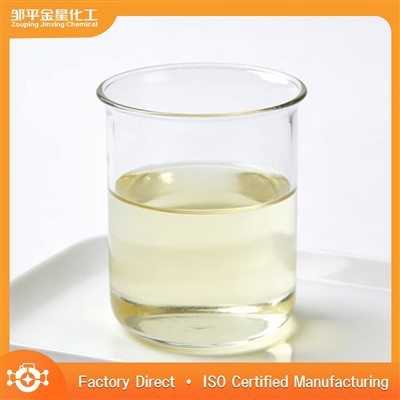
Appearance: Thiophosgene is a reddish-yellow oily liquid with a strong, pungent, and foul odor (more offensive than phosgene)
Boiling point: Approx. 73–73.5°C; Melting point: Approx. -56°C
Density: 1.508 g/cm³ (15°C); Refractive index: n²⁰D ≈ 1.548
Solubility: Soluble in diethyl ether, benzene, and chlorinated hydrocarbons; decomposes violently upon contact with water, alcohols, or amines, releasing HCl and H₂S-type by-products
Vapor pressure: Approx. 127 mmHg at 25°C; vapor density is approximately four times that of air, making it prone to accumulation in low-lying areas
Structural and Reaction Characteristics
It has the structure Cl–C(=S)–Cl and contains a thiocarbonyl (C=S) group; it is a key reagent in organic synthesis for introducing the thiocarbonyl moiety.
Typical reactions: reacts with primary amines to form isothiocyanates (R–N=C=S); participates in the construction of heterocycles (such as thiazolinones); serves as an intermediate for thiocarbamate pesticides.
Industrially, it is produced from perchloromethyl mercaptan via reductive elimination using SO₂/KI.
Primary Uses
Pesticide intermediates: Synthesis of diafenthiuron (acaricide) and thiocarbamate insecticides/herbicides
Pharmaceuticals/Dyes: Production of isothiocyanates and sulfur-containing heterocyclic compounds
Laboratory reagents: C=S bond construction, thiocarbonylation reactions
Safety, Storage, and Transportation
Thiophosgene is highly toxic and corrosive: UN 2474, Hazard Class 6.1(a), PG II; H331 (Toxic if inhaled), H302 (Harmful if swallowed), H315/H319 (Causes skin and eye irritation), H335 (May cause respiratory irritation).
Inhalation may cause laryngospasm, chemical pneumonitis, and pulmonary edema; contact causes a burning sensation, coughing, headache, and nausea.
Storage and transport: Store thiophosgene in a sealed, dry, and light-protected environment at 2–8°C; strictly prohibit co-storage with water, alcohols, amines, or strong oxidizing agents.
Spill handling: Do not flush with water; absorb with sand/vermiculite and neutralize with an alkaline solution (e.g., 5% NaOH).
Operations must be conducted in a fume hood or negative-pressure glove box; wear a gas mask (Type A filter cartridge for acidic gases and organic vapors), acid-resistant gloves, and safety goggles.
FAQ
Q: What is Thiophosgene mainly applied for?
A: Important intermediate for agrochemical, pharmaceutical and heterocyclic compound synthesis.
Q: What is your standard packaging?
A: Special sealed anti-corrosion packaging for toxic chemicals.
Q: What precautions are required during handling?
A: Operate in fume hood with complete protective equipment.
Hot Tags: thiophosgene, China thiophosgene manufacturers, suppliers, factories, 2 3 dimethylene, aluminum chloride hexahydrate in anhydrous ethanol, benzoic acid solubility in dichloromethane, dimethyl sulfoxide dmso anhydrous, methyl tert butyl ether application, poly cyclohexylene dimethylene cyclohexanedicarboxylate
Previous
Propionic AcidYou Might Also Like


Send Inquiry