



Perhydropolysilazane
Zouping Jinxing Chemical Co., Ltd. is one of the leading manufacturers and suppliers of perhydropolysilazane in China. If you're going to wholesale bulk perhydropolysilazane made in China, welcome to get free sample from our factory. All customized products are with high quality and low price.
Basic properties
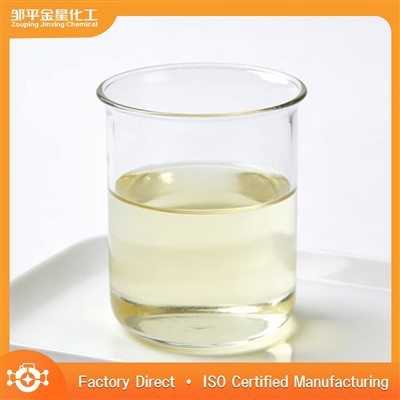
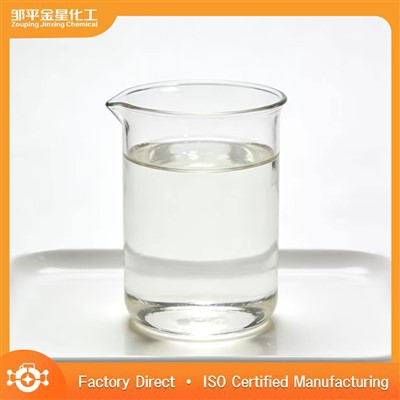
Appearance: Perhydropolysilazane is a colorless to pale yellow, transparent liquid with a slight odor of ammonia; it is soluble in alkanes, aromatic hydrocarbons, and ethers.
Extremely sensitive to water/humidity: hydrolyzes and crosslinks upon contact with water vapor or air moisture, releasing H₂ and gradually solidifying into an inorganic film.
Low-temperature ceramization: Cures at room temperature; transforms to SiO₂ at 150–400℃, and to SiON/Si₃N₄ at higher temperatures (600–1000℃, in N₂).
Cure film characteristics: Transparent (light transmittance >90%), dense, high hardness (pencil hardness 6H–9H), high insulation, oxygen and moisture barrier, UV resistant, corrosion resistant.
Main uses
Semiconductor/Microelectronics: Spin coating partially replaces CVD/ALD for chip passivation layers, interlayer insulation, and Si₃N₄/SiO₂ films; the dichlorosilane you asked about earlier is its core monomer.
Flexible Electronics: Water and oxygen barrier layers (10–200 nm thin) for OLEDs, flexible screens, and photovoltaic packaging.
Transparent Curing Coatings: Wear-resistant and anti-fouling layers for glass, automotive lights, optical lenses, and 3C product casings.
Corrosion/Weather Resistance: Perhydropolysilazane is suitable for use as a waterproof and anti-oxidation coating for metal, concrete, and stone.
Ceramic Precursors: High-temperature Si₃N₄ fiber/matrix conversion for aerospace thermal protection and high-temperature tooling.
Packaging Barriers: PET/OPP film coating to improve freshness and moisture resistance.
Safety and Operation
Reacts violently with water, releasing hydrogen gas → flammable and explosive, classified as a hazardous chemical.
Irritating to eyes, skin, and respiratory tract; hydrolysis products contain NH₃ and trace amounts of HCl mist.
Requires nitrogen/argon protection, stainless steel/Teflon containers, explosion-proof storage, and absolute protection from water.
Waste liquid should be disposed of as hazardous silicon-containing waste liquid by a professional treatment facility; do not pour into sewers.
FAQ
Q: Toxicity and Occupational Health
A: Not a neurotoxin or carcinogen; primary risks are irritation due to hydrolysis and flammability:
Liquid causes skin, eye, and respiratory irritation (GHS: H315 Skin Irritation, H319 Eye Irritation, H302 Harmful if Swallowed, H227 Combustible);
Curing process releases NH₃ (ammonia) and H₂ (hydrogen)-ammonia causes mucosal irritation, while hydrogen poses an explosion risk in confined spaces;
The fully cured SiO₂ film is inert, non-irritating, and free of PFAS and VOCs.
Occupational Exposure Limits: No specific TWA; managed based on the combined profile of "ammonia + solvent + dust (post-curing)"; recommended workshop limit for NH₃ is ≤ 25 ppm.
GHS Signal Word: Warning (may be upgraded to Danger depending on the specific formulation).
Q: Key Points for Handling and Storage
A: Operations must be conducted under a nitrogen or argon blanket in a glovebox or dry room (RH < 30%) using a fume hood with explosion-proof capabilities;
PPE: Nitrile or butyl gloves, safety goggles and face shield, chemical-resistant suit, and respirator with organic vapor/ammonia cartridges (SCBA required for high concentrations);
Strictly water-free: Do not clean tools with alcohol or water; contain spills using dry sand or vermiculite; do not flush with water (reaction releases hydrogen and poses a fire risk);
Storage: Store in original containers under nitrogen blanket, refrigerated below 10°C, and protected from light; use promptly after opening (shelf life ranges from 4 hours to several days depending on the formulation); strictly avoid frequent opening of containers;
Firefighting: Use dry chemical powder, CO₂, or sand/earth; do not use direct water streams; combustion produces SiO₂ fumes and NH₃, requiring firefighters to use SCBA.
Hot Tags: perhydropolysilazane, China perhydropolysilazane manufacturers, suppliers, factories, 2 3 dimethylene, anhydrous tetrahydrofuran thf, butyl acetate ethyl acetate thinner, Industrial Grade High Active Trimethyl Chlorosilane, Industrial Grade High solubility 95 Ethanol, Low toxicity Environmentally Friendly Xylene
Previous
2-PhenylphenolNext
DichlorosilaneYou Might Also Like



Send Inquiry