



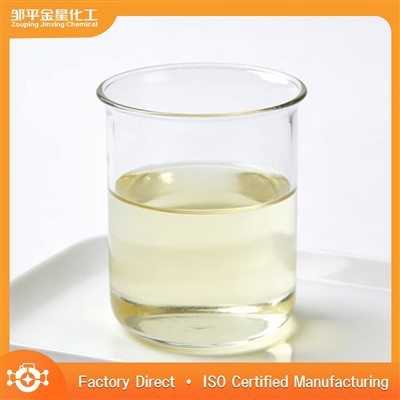
Heptafluoropropane
Zouping Jinxing Chemical Co., Ltd. is one of the leading manufacturers and suppliers of heptafluoropropane in China. If you're going to wholesale bulk heptafluoropropane made in China, welcome to get free sample from our factory. All customized products are with high quality and low price.
Basic properties
Molecular weight: 170.03, gaseous density approximately 6.16 kg/m³ (about 5 times that of air at 20℃, similar to SF₆ in density).
Boiling point: -16.4℃, critical temperature 101.7℃, can be liquefied and stored in steel cylinders.
Non-conductive, non-corrosive, leaves no residue, evaporates completely after spraying, does not damage equipment or soil the machine room.
Ozone depletion potential (ODP) = 0, but gross volatile organic compound (GWP) ≈ 3220 (one order of magnitude smaller than SF₆, still considered a strong greenhouse gas).
Design extinguishing concentration is typically 8%–9% (by volume), NOAEL 9%, mild physiological effects only begin to appear in humans at concentrations above 10.5%.
Main uses
Main applications of gaseous fire suppression systems: data centers, communication equipment rooms, power distribution rooms, archives, museums, ship cabins, and subway control rooms.
Replacing Halon 1301 (successor after the ban on ODP substances), and also partially replacing IG-541 and CO₂ systems.Heptafluoropropane is used to a limited extent in refrigerant research, but its primary application is fire suppression.
Safety and Limitations
The release will produce a certain concentration of HF (hydrofluoric acid mist), which is slightly corrosive to metals and irritating to the human respiratory tract-therefore, do not enter immediately after the release; ventilate first.
The high-temperature decomposition products are simpler than SF₆, but are still essentially hydrofluoric acid mist.
Pipeline transport distance is limited (compared to IG mixtures), so resistance must be calculated during design.
Environmental pressure: Under the new national standards and dual-carbon policy, some new projects are beginning to switch to perfluorohexanone (Novec 1230) or fine water mist/inert gases. Heptafluoropropane has a large existing market but a shrinking new market.
FAQ
Q: Key Points for Handling and Storage
A: Key safety measures focus on preventing asphyxiation, frostbite, and high-pressure explosions; gas masks and corrosion protection are not required.
PPE: Anti-frostbite gloves (to protect against cryogenic burns from liquid spray), safety goggles, and face shields; hard hats must be worn when handling cylinders.
Storage: Cool, well-ventilated, explosion-proof gas cylinder room (≤30°C); store upright and secured, away from heat sources and strong oxidizers.
Cylinders pose a risk of physical explosion when heated; protect from direct sunlight and avoid violent impacts.
Firefighting: The gas itself is non-flammable, but cylinders exposed to fire may explode-use water spray to cool cylinders, cut off the gas supply, and evacuate personnel.
Q: Toxicity and Occupational Health
A:Inherently low toxicity: NOAEL (No-Observed-Adverse-Effect Level) is 9.0% and LOAEL (Lowest-Observed-Adverse-Effect Level) is 10.5%; the design extinguishing concentration of 7–10% falls below these safety thresholds.
⚠️ The real risk lies in high-temperature decomposition producing HF: decomposition begins above 500°C and becomes rapid at 750°C; the primary product is hydrogen fluoride (HF), along with trace amounts of carbonyl fluoride (COF₂) and CO. HF is highly corrosive and can cause chemical burns to the respiratory tract and skin; at a concentration of 4.8 g/L, exposure for one minute can be fatal to approximately 1% of exposed individuals.
Key to suppressing HF formation: GB 50370 mandates a discharge time of ≤10 seconds; the faster the fire is extinguished, the less HF is produced.
GHS Label: Warning; H280 (Contains gas under pressure; may explode if heated) + H315 (Causes skin irritation) + H319 (Causes serious eye irritation) + H335 (May cause respiratory irritation).
Q: Fire-extinguishing mechanism
A: Chemical inhibition (primary mechanism): Decomposes at high temperatures to release fluorine-containing radicals (such as CF₃, CF₂, and CFO), which scavenge active radicals (such as H·, OH·, and O₂·) in the combustion chain, thereby interrupting the chain reaction; Physical cooling: Vaporizes instantly upon discharge, absorbing significant latent heat and lowering the temperature of the fire zone; Localized smothering: Vapor with six times the density of air rapidly fills the protected area, diluting the partial pressure of oxygen.
Hot Tags: heptafluoropropane, China heptafluoropropane manufacturers, suppliers, factories, 2 3 dimethylene, Anhydrous Ethanol, ethyl dimethyl acetate, Industrial Grade High Purity N heptane, n n dimethylene diamine, tetrahydrofuran aldrich
Previous
OctafluoropropaneYou Might Also Like


Send Inquiry