



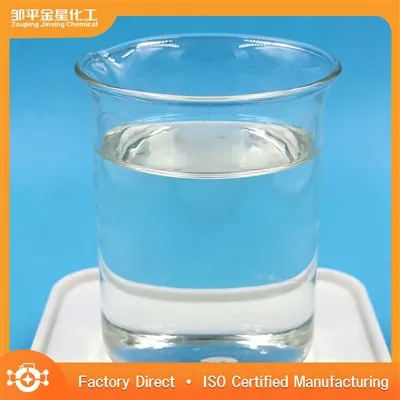
Dimethylformamide
Zouping Jinxing Chemical Co., Ltd. is one of the leading manufacturers and suppliers of dimethylformamide (dmf) in China. If you're going to wholesale bulk dimethylformamide (dmf) made in China, welcome to get free sample from our factory. All customized products are with high quality and low price.
Primary Uses
Industrial Solvents: A key solvent for polyurethane synthesis, acrylic fiber wet spinning, artificial leather production, and resin processing.
Gas Separation: Dimethylformamide is used in the petrochemical industry for the separation and recovery of butadiene from C4 fractions and for the selective absorption of acetylene.
Pharmaceuticals and Agrochemicals: Serves as a reaction medium and raw material for the synthesis of vitamins, antibiotics, sulfonamides, and pesticides such as chlordimeform.
Electronics Industry: Used for printed circuit board cleaning, photoresist stripping, and as a solvent for organic electrolytes.
Safety and Toxicology
Toxicological characteristics: Dimethylformamide can be absorbed through the respiratory tract and the skin; the liver is the primary target organ, and long-term exposure may lead to liver dysfunction.
Reproductive hazards: Poses a clear risk to the reproductive system; classified by IARC as a Group 2A carcinogen (probably carcinogenic to humans).
Fire and explosion risks: Vapors can form explosive mixtures with air (explosive limits: 2.2%–15.2%); highly flammable and prone to explosion when exposed to open flames or high heat.
Synthetic route
Thermal Hydrolysis: DMF decomposes readily at high temperatures and undergoes rapid hydrolysis in the presence of acids or bases to form formic acid and dimethylamine.
Vacuum Distillation: DMF-containing wastewater is typically neutralized first, followed by vacuum distillation; operating under reduced pressure lowers the process temperature, thereby preventing thermal decomposition.
Heat Pump Energy Efficiency: Modern industrial processes often integrate heat-pump-assisted distillation with pervaporation membrane technology, significantly reducing steam energy consumption while enhancing recovery purity.
FAQ
Q: Key Points for Handling and Storage
Ventilation and prevention of skin contact are paramount: operations must be conducted within an explosion-proof fume hood utilizing both local exhaust and general ventilation; real-time monitoring of airborne concentrations is required.
PPE: Butyl rubber gloves (preferred), chemical-resistant protective clothing, safety goggles, and an organic vapor respirator; bare-hand contact is strictly prohibited; work clothing must be changed immediately if contaminated.
Storage: Store in a sealed, cool, well-ventilated, explosion-proof facility (≤30°C); keep away from strong oxidizers (e.g., potassium permanganate, nitric acid), strong acids, and strong bases; avoid direct sunlight.
Leakage handling: Collect using sand, soil, or inert absorbent materials; for large spills, transfer to a dedicated collection vessel using an explosion-proof pump; dispose of via incineration as nitrogen-containing organic hazardous waste (flue gas requires denitrification).
Firefighting: Use alcohol-resistant foam, dry chemical powder, CO₂, or sand/soil; avoid using direct water jets (which may cause splashing).
Q: Common alternatives
A: Due to toxicity concerns, DMF is being replaced in many applications:
Synthetic reactions: N-Methyl-2-pyrrolidone (NMP; use continues despite reproductive toxicity concerns), Dimethylacetamide (DMAC; slightly lower toxicity), γ-Butyrolactone (GBL), and Ethyl acetate/Butyl propionate (low toxicity but weak solvency);
Spinning processes: Ionic liquids and aqueous spinning technologies (gradually gaining adoption);
Electronics cleaning: Alcohol ethers (e.g., PMA) and specialized low-toxicity cleaning agents.
Q: Key Points on Procurement and Compliance
A: A Certificate of Analysis (COA) (specifying purity ≥99.5%, moisture content ≤0.1%, and heavy metals ≤10 ppm) and a Safety Data Sheet (SDS) (including warnings regarding hepatotoxicity and reproductive toxicity) must be obtained. Suppliers must hold a Hazardous Chemical Operation License and a registration certificate for precursor chemicals (in accordance with local requirements). The user enterprise must maintain a DMF usage log, regularly monitor airborne concentrations in the workplace, and organize occupational health check-ups for employees (focusing on liver function and the reproductive system). Laboratory-scale containers must be entered into inventory as hazardous chemicals; storage in the same cabinet as food products or strong oxidizing agents is strictly prohibited.
Hot Tags: dimethylformamide (dmf), China dimethylformamide (dmf) manufacturers, suppliers, factories, acid hydrolysis of butyl acetate, acne creams benzene recall, butyl acetate alternative, Dichloromethane Anhydrous, liquid dimethyl sulfoxide dmso and idoxuridine, tetrahydrofuran aldrich
Previous
N-HeptaneYou Might Also Like



Send Inquiry