



Acrolein
Zouping Jinxing Chemical Co., Ltd. is one of the leading manufacturers and suppliers of acrolein in China. If you're going to wholesale bulk acrolein made in China, welcome to get free sample from our factory. All customized products are with high quality and low price.
Basic physical properties
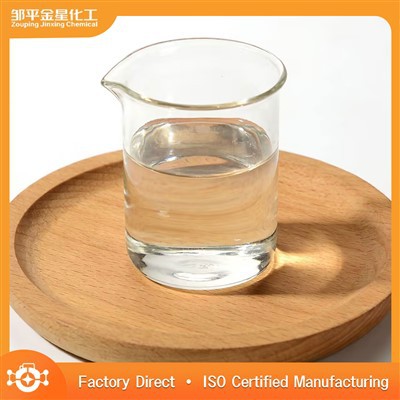
Appearance: Acrolein is a colorless to pale yellow, transparent liquid with a strong, pungent, acrid odor resembling burnt fat.
Melting/Boiling Points: mp −87.7°C, bp 52.5°C (very low; it volatilizes rapidly at room temperature).
Density: 0.839–0.843 g/cm³ (at 20°C).
Vapor Pressure: Approx. 28 kPa (at 20°C)-in other words, the surrounding air reaches dangerous concentrations the moment the bottle is opened.
Solubility: Soluble in water (approx. 20% at 20°C); completely miscible with alcohols, ethers, and acetone.
Stability: Prone to polymerization upon exposure to light, heat, or alkalis; long-term storage leads to the formation of shock-sensitive peroxides. Industrial-grade product requires the addition of a polymerization inhibitor (commonly hydroquinone, approx. 0.2%) and must be stored under nitrogen, in the dark, and at low temperatures.
Three mainstream synthetic routes
1. Catalytic air oxidation of propylene (the dominant modern industrial method)
Propylene, air, and steam are reacted in a molar ratio of approximately 1:10:2 using a bismuth molybdate or bismuth phosphomolybdate catalyst in a fixed-bed reactor at 350–450°C and 0.1–0.2 MPa, with a contact time of 0.8 seconds; reaction heat is recovered to generate steam. The product stream undergoes rapid cooling and water absorption, followed by stripping and fractional distillation (to remove water and acetaldehyde) to yield crude acrolein. Global annual production capacity exceeds 500,000 tonnes.
CH₂=CH−CH₃ + O₂ → CH₂=CH−CHO + H₂O
2. Glycerol dehydration method (preferred for laboratory and small-batch production)
Glycerol is heated with potassium bisulfate (or magnesium sulfate, boric acid, or aluminum chloride) at 215–235°C; the acrolein distills off with the vapors and is collected by condensation. The crude product is neutralized to pH ≈ 6 using 10% NaHCO₃ and then fractionally distilled, achieving a yield of approximately 60–70%. The molar ratio of reactants is Glycerol : KHSO₄ : K₂SO₄ = 1 : 0.5 : 0.026.
3. Formaldehyde–acetaldehyde gas-phase condensation (an early industrial route, now largely obsolete)
Formaldehyde and acetaldehyde undergo gas-phase condensation at 300–320°C using a sodium silicate-impregnated silica gel catalyst; total yields are approximately 65% based on formaldehyde and 75% based on acetaldehyde. The catalyst is prone to coking and requires periodic regeneration by burning off carbon deposits with a steam-air mixture at 400°C; exposure to temperatures exceeding 600°C causes permanent deactivation.
Primary Uses
The bifunctional nature of acrolein makes it a "crossroads" platform molecule, branching out into several key downstream industrial chains:
→ Acrylic acid: Produced via catalytic oxidation; subsequent esterification yields acrylates-core monomers for water-based coatings, adhesives, and superabsorbent polymers (SAP).
→ Allyl alcohol: Produced via selective hydrogenation; serves as a precursor for epichlorohydrin and glycerol.
→ Methionine: The leading amino acid additive for animal feed, with massive global consumption.
→ Glutaraldehyde and 1,2,6-hexanetriol: Used as water treatment biocides and cross-linking agents.
→ Pesticide intermediates (e.g., for imidacloprid) and the anti-tumor drug methotrexate (via the 2,3-dibromopropanal route).
FAQ
Q: Toxicity and Occupational Health
A: Extremely high acute toxicity: oral LD₅₀ in rats is only 26 mg/kg (highly toxic), inhalation LC₅₀ is 18 mg/m³ (4-hour exposure), and dermal LD₅₀ in rabbits is 200 mg/kg; Detectable at very low concentrations: eye and nasal irritation occur at 0.09 ppm, respiratory rate decreases at 0.3 ppm, and the odor threshold is approximately 1.8 ppm; ⚠️ Classified as IARC Group 2A (probably carcinogenic to humans) as of 2020: based on sufficient evidence in animals and strong mechanistic evidence (electrophilicity, genotoxicity, oxidative stress, chronic inflammation), with links to lung and bladder cancer risks; IDLH is only 2 ppm-concentrations exceeding this level pose an immediate threat to life; Extremely strict occupational exposure limits: OSHA/ACGIH TWA of 0.1 ppm (0.23 mg/m³) and STEL of 0.3 ppm.
Q: Key Points for Handling and Storage
A: Fully enclosed system + explosion-proof ventilation + LEL alarm with real-time atmospheric concentration monitoring; initial isolation radius of 300 m for leaks, with a downwind evacuation zone of 1,000 m; PPE: Level A chemical protective suit + SCBA (required if vapor concentration >2 ppm); Viton/Responder permeation-resistant gloves (bare-hand contact strictly prohibited); Storage: Cool, ventilated, explosion-proof warehouse (≤30°C); must contain stabilizers (hydroquinone or phenothiazine, 100–200 ppm) to prevent spontaneous polymerization; protect from light, oxygen, and alkalis; Incompatible materials: Strong oxidizers, acids, alkalis, amines, and ammonia-contact triggers violent reactions or even explosions.
Q: Leakage and Firefighting
A: Firefighting: Alcohol-resistant foam, dry chemical, CO₂, sand/earth-do not use direct water streams (as this may cause the fire to spread via splashing, and acrolein is water-soluble, which would exacerbate contamination); Leakage: Absorb with sand/earth or activated carbon and contain with dikes; small amounts may be neutralized with sodium bisulfate (NaHSO₄); for large leaks, isolate the area within a 1,000 m radius and evacuate 11,000 m downwind; ⚠️ Risk of exothermic polymerization: Acrolein undergoes dangerous polymerization at high temperatures, potentially causing container rupture; firefighters must extinguish the fire using remote-controlled equipment from a safe distance.
Hot Tags: acrolein, China acrolein manufacturers, suppliers, factories, aspirin solubility in dichloromethane, benzaldehyde dimethyl acetate, butyl acetate acetone, butyl acetate alternative, chloromethyl trimethylsilane, Industrial Grade High Purity N heptane
Previous
Propylene TetramerYou Might Also Like


Send Inquiry