



Methyl Methacrylate
Zouping Jinxing Chemical Co., Ltd. is one of the leading manufacturers and suppliers of methyl methacrylate in China. If you're going to wholesale bulk methyl methacrylate made in China, welcome to get free sample from our factory. All customized products are with high quality and low price.
Key physicochemical properties
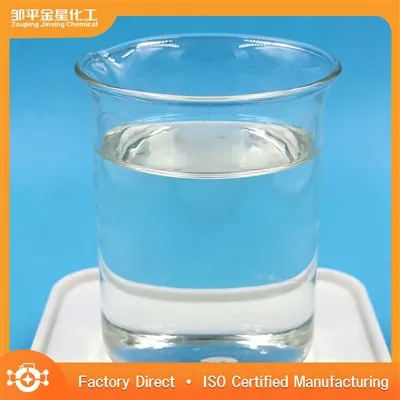
Appearance: Methyl methacrylate is a colorless, transparent, and free-flowing liquid with a slightly sweet, ester-like odor (vapors at high concentrations have a mild anesthetic effect).
Boiling point: 100.3°C (760 mmHg); Melting point: −48°C
Density: 0.940 g/cm³ (25°C)
Flash point: Approx. 10°C (closed cup) → Highly flammable liquid (GHS Flam. Liq. 2), UN 1247 PG II
Refractive index: n²⁰D ≈ 1.413
Solubility: Slightly soluble in water (approx. 1.6 g/100 mL at 20°C); miscible with alcohols, ketones, esters, aromatic hydrocarbons, and chlorinated hydrocarbons; insoluble in glycerol and ethylene glycol
Polymerization tendency: Methyl methacrylate undergoes slow, spontaneous polymerization at room temperature. Polymerization is initiated by light, heat, peroxides, or free radicals; industrial-grade products must contain a polymerization inhibitor (typically 10–100 ppm MEHQ [p-methoxyphenol] or BHT).
Reaction characteristics
A typical α,β-unsaturated ester: undergoes free-radical polymerization to form PMMA (Plexiglass/acrylic); also processed via emulsion polymerization, suspension polymerization, and bulk casting.
Can be copolymerized with styrene, butyl acrylate, acrylonitrile, etc., to adjust the glass transition temperature (homopolymer Tg ≈ 105°C).
The double bond is susceptible to addition reactions (hydrogenation, halogenation), and the ester group can be saponified to yield methacrylic acid.
Hazards: Exothermic self-polymerization-if the polymerization inhibitor fails and heat dissipation is poor, explosive polymerization and material ejection from the drum can occur; never distill to dryness (due to high-temperature decomposition of residual MEHQ and localized self-polymerization).
Primary Uses
Cast/Extruded PMMA: Aircraft canopies, advertising light boxes, light guide plates, dental tray materials
Emulsions and Coatings: Architectural coatings, paper glazing, PVC processing aids (ACR)
Copolymers: MBS (PVC impact modifiers), MMA-styrene copolymers (transparent ABS alternatives), textile sizing agents
Medical: Bone cement (PMMA beads + BA system), dental materials, clear aligner sheets
Electronics: Acrylate segments for photoresists, optical fiber cladding, hard coatings
Safety, Storage, and Transportation
GHS: H225 Highly flammable; H302/H312 Harmful if swallowed or in contact with skin; H315/H317/H319 Causes skin irritation/may cause an allergic skin reaction/causes serious eye irritation; H335 May cause respiratory irritation.
Vapors irritate eyes, nose, and throat; high concentrations cause headache and drowsiness. Liquid causes defatting of the skin leading to dermatitis; contact allergy in sensitive individuals.
Handling: Use fume hood and explosion-proof equipment; wear nitrile gloves and safety goggles. Store away from light at low temperatures (≤25°C; ideally 15–20°C); keep containers full and nitrogen-blanketed. Periodically measure inhibitor content; conduct a small-scale polymerization test before use if near expiration.
Storage & Transport: Do not store with peroxides, azo compounds, strong acids/bases, or free-radical sources. In case of leakage, cover with foam to prevent evaporation and absorb with sand or earth; do not discharge into open drains (aquatic toxicity).
Firefighting: Use alcohol-resistant foam, CO₂, or dry chemical powder. Risk of explosive polymerization and container explosion due to heat; firefighters must use SCBA.
Before distillation/bulk polymerization: Verify inhibitor status (remove MEHQ via NaOH wash followed by brine wash, or add fresh inhibitor); control temperature ≤80°C; maintain nitrogen blanket; do not distill to dryness.
FAQ
Q: Toxicity and Occupational Health
A: Primary hazards: Irritation + neurotoxicity + suspected carcinogenicity.
Acute: Vapors irritate the eyes, nose, and throat, causing tearing, coughing, and headaches; high concentrations can lead to nausea, vomiting, and central nervous system depression; liquid splashes in the eyes can cause corneal burns; skin contact causes defatting, erythema, and dermatitis.
Chronic: Long-term exposure may lead to neurasthenia syndrome and liver/kidney dysfunction; animal studies show high doses can cause lung tumors; classified as Group 3 by IARC (not classifiable as to carcinogenicity to humans) and A4 by ACGIH (not classifiable as a human carcinogen), while NIOSH recommends managing it as a potential occupational carcinogen.
Sensitization: Weaker than methyl acrylate, but may still cause skin sensitization.
LD₅₀ (rat, oral): Approx. 7.9–9.4 g/kg (low toxicity), but inhalation toxicity is higher (LC₅₀ rat, 4h: approx. 27 mg/L).
Occupational exposure limits:
China GBZ 2.1: PC-TWA 100 mg/m³ (≈24 ppm), PC-STEL 200 mg/m³
ACGIH TLV-TWA: 50 ppm (skin absorption notation)
OSHA PEL: 100 ppm (TWA)
Q: Key Points for Handling and Storage
A: Ventilation + Polymerization Prevention + Leak Prevention: Operations must be conducted in an explosion-proof fume hood utilizing both local and general exhaust ventilation; install a combustible gas detector.
Polymerization Prevention: Polymerization inhibitors (typically 10–100 ppm MEHQ or BHT) must be added during storage; store away from light at low temperatures (refrigerated at 2–8°C); avoid contact with peroxides, strong acids, strong bases, amines, and free-radical initiators (which can trigger violent exothermic polymerization or even explosions).
PPE: Chemical-resistant goggles/face shield, nitrile or neoprene gloves, anti-static workwear, and organic vapor respirator; handling with bare hands is strictly prohibited.
Storage: Store in a sealed, cool, well-ventilated, explosion-proof warehouse (≤30°C); keep separate from oxidizers, acids, bases, and initiators; regularly check inhibitor levels and replenish inhibitors in expired monomers.
Leak Handling: Collect using sand, soil, or inert absorbent materials; for large leaks, transfer to a dedicated collection vessel using an explosion-proof pump; dispose of via incineration as hazardous organic waste containing unsaturated bonds (exhaust gas treatment required).
Firefighting: Use alcohol-resistant foam, dry chemical powder, CO₂, or sand/soil; do not use direct water jets (which may cause splashing and spread the material).
Hot Tags: methyl methacrylate, China methyl methacrylate manufacturers, suppliers, factories, acid hydrolysis of butyl acetate, anhydrous ethanol alcohol, dimethyl sulfoxide dmso cream, High Purity Acrylic Acid Of Aggregated Grade, tetrahydrofuran thf and cyclohexanone, toluene ace hardware
Previous
MethylcyclohexaneYou Might Also Like


Send Inquiry