Hey there! As a ferric chloride supplier, I often get asked about how ferric chloride reacts with bromide ions. It's a pretty interesting topic, and I'm excited to share some insights with you.
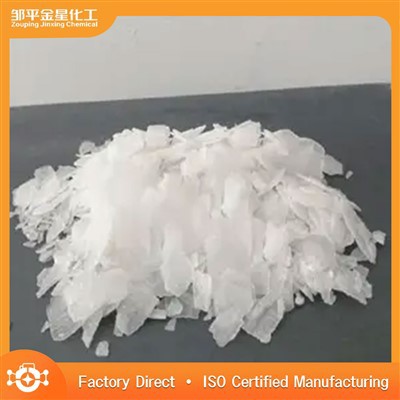
First off, let's talk a bit about ferric chloride. We offer different types of ferric chloride products, like Solid Ferric Chloride, Liquid Ferric Chloride, and Acidic Ferric Chloride. Each has its own unique properties and uses, but they all have that core ferric chloride chemistry at play.


Now, onto the reaction between ferric chloride and bromide ions. Ferric chloride has the chemical formula FeCl₃. In an aqueous solution, it dissociates into ferric ions (Fe³⁺) and chloride ions (Cl⁻). Bromide ions (Br⁻) come from substances like sodium bromide (NaBr) when it's dissolved in water.
The reaction between ferric ions and bromide ions is an oxidation - reduction reaction. Ferric ions (Fe³⁺) are good oxidizing agents. They have a relatively high oxidation state and are eager to gain electrons to reach a more stable state. Bromide ions, on the other hand, are in a -1 oxidation state and can lose an electron to form bromine (Br₂).
The chemical equation for the reaction is:
2Fe³⁺ + 2Br⁻ → 2Fe²⁺ + Br₂
Let's break down what's happening here. The ferric ions (Fe³⁺) are being reduced to ferrous ions (Fe²⁺) by gaining an electron from the bromide ions. The bromide ions are being oxidized to bromine. This is a classic redox reaction where oxidation and reduction occur simultaneously.
The reaction is influenced by several factors. One of the key factors is the concentration of the reactants. If you have a higher concentration of ferric ions and bromide ions, the reaction will proceed more quickly. This is because there are more particles available to collide and react with each other.
Another factor is the pH of the solution. In an acidic environment, the reaction is more likely to occur. The acidic conditions can help to stabilize the products and promote the transfer of electrons. Our Acidic Ferric Chloride can be a great option if you're looking to carry out this reaction in an acidic medium.
Temperature also plays a role. Higher temperatures generally increase the rate of the reaction. This is because at higher temperatures, the particles have more kinetic energy, which means they move around more quickly and are more likely to collide with each other.
Now, let's talk about some real - world applications of this reaction. In the field of analytical chemistry, this reaction can be used to detect the presence of bromide ions in a sample. By adding ferric chloride to a solution suspected of containing bromide ions, if a color change occurs (due to the formation of bromine), it indicates the presence of bromide ions.
In the industrial sector, this reaction can be used in the production of certain chemicals. For example, the bromine produced can be used in the synthesis of pharmaceuticals, flame retardants, and other important compounds.
As a ferric chloride supplier, we understand the importance of providing high - quality products for these types of reactions. Our Solid Ferric Chloride is easy to store and transport, making it a convenient option for many applications. The Liquid Ferric Chloride is ready - to - use and can be easily mixed into solutions.
If you're involved in research, chemical production, or any other field where the reaction between ferric chloride and bromide ions is relevant, we'd love to be your ferric chloride supplier. We offer competitive prices, high - quality products, and excellent customer service. Whether you need a small amount for a laboratory experiment or a large quantity for industrial use, we can meet your needs.
If you're interested in learning more about our ferric chloride products or have any questions about the reaction between ferric chloride and bromide ions, don't hesitate to reach out. We're here to help you with all your ferric chloride needs.
References:
- Atkins, P. W., & de Paula, J. (2014). Physical Chemistry. Oxford University Press.
- Housecroft, C. E., & Sharpe, A. G. (2012). Inorganic Chemistry. Pearson Education.