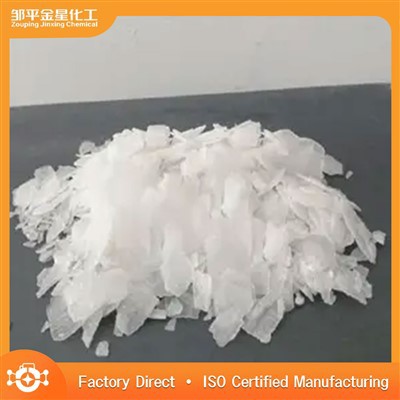
If you’ve ever worked with ammonium sulfate—whether as a farmer tending to row crops, a lab researcher purifying proteins, or an industrial specialist refining chemicals—you’ve probably noticed its fine, white crystalline powder or small, hard granules. But have you ever stopped to wonder why those crystals look the way they do, how they form, and what their structure means for how you use the product? As a supplier who’s spent years shipping ammonium sulfate to labs, farms, and manufacturing facilities across the globe, I’ve seen firsthand how its crystal properties tie directly to its performance—so today, I want to break down the crystal structure of ammonium sulfate, why it matters, and how our different grades (from reagent-grade to industrial-grade) leverage that structure for specific use cases.
First, let’s start with the basics: ammonium sulfate has the chemical formula (NH₄)₂SO₄, right? That means it’s made up of two ammonium ions (NH₄⁺) and one sulfate ion (SO₄²⁻). At the molecular level, these charged ions arrange themselves in a repeating, three-dimensional pattern—what scientists call a crystal lattice. This isn’t random; the way the positive and negative ions attract each other dictates everything from the crystal’s shape to how it dissolves, which is super important no matter what you’re using ammonium sulfate for.
Now, the specific crystal structure of ammonium sulfate is called an orthorhombic crystal system. Wait, let me make that simple—orthorhombic just means its unit cell (the tiny, repeating building block of the crystal) has three sides of different lengths, all at 90-degree angles to each other. Think of a shoebox that’s slightly longer in one direction than the other two, not a cube. For (NH₄)₂SO₄, the unit cell dimensions are roughly 7.78 Å, 10.60 Å, and 5.97 Å (an Ångstrom is one ten-billionth of a meter, for context). Inside that unit cell, the ammonium ions sit in specific positions around the sulfate ions, held together by ionic bonds—positive NH₄⁺ are attracted to the negative SO₄²⁻, and vice versa.
Here’s a fun, practical detail about this structure: ammonium sulfate can undergo a phase change when it’s heated, around 250 °C (that’s 482 °F for anyone using Fahrenheit). Below that temperature, it’s that stable orthorhombic structure, but when you crank up the heat past that point, the crystal shifts to a cubic structure. Most of us never see that phase change because ammonium sulfate starts to decompose at higher temperatures, releasing ammonia and sulfur dioxide, so it doesn’t melt smoothly—but the orthorhombic form is the one we encounter in nearly all commercial and lab settings.
Now, why does this crystal structure matter for your work? Let’s take a common example: using ammonium sulfate as a salting-out agent in biochemistry. When researchers purify proteins, they add high concentrations of ammonium sulfate to a solution to make proteins clump together (precipitate) so they can be collected. The crystal structure of ammonium sulfate means it dissolves very well in water—its ionic bonds break easily when surrounded by water molecules, so it can reach the high concentrations needed for salting-out without leaving undissolved solids that would contaminate samples. That’s why our reagent-grade ammonium sulfate is a go-to for labs: we source it to meet strict purity standards, and its consistent crystal structure ensures reliable, repeatable dissolving every time. If you work in a lab, you can learn more about this grade on our page for Reagent-grade Ammonium Sulfate—it’s tested for low levels of heavy metals and other impurities that would mess with sensitive experiments.
For farmers, the crystal structure of ammonium sulfate is tied directly to its fertilizer performance. Our product Ammonium Sulfate 21% Nitrogen is a popular choice because it provides two key nutrients: nitrogen (21% by weight, as ammonium) and sulfur (24% by weight, as sulfate)—both essential for crop growth. The orthorhombic crystal structure of this fertilizer grade means it has a moderate solubility in water (about 70 g per 100 mL of water at 20 °C) that makes it easy to apply either as a dry spread or mixed with irrigation water. Unlike some more soluble fertilizers that leach quickly, ammonium sulfate’s crystal structure releases nutrients slowly as the crystals break down in soil moisture, so crops get a steady supply of nitrogen and sulfur over their growing season. For larger-scale farming, our Ammonium Sulfate Granular Fertilizer has even larger, stronger crystals that are less likely to dust during handling and application, reducing waste and making it easier to spread evenly across fields.
Even industrial and food-grade ammonium sulfate rely on their crystal structures. Industrial-grade ammonium sulfate, used for things like water treatment, paper manufacturing, and chemical processing, has a rugged, consistent orthorhombic crystal structure that makes it resistant to caking during storage and transport. Caking is when crystals stick together into hard lumps, which is a huge headache for bulk shipments—our industrial grade is processed to minimize this, thanks to controlled crystallization conditions that keep the unit cell arrangement uniform. You can check out our industrial-grade offering here: Industrial-grade Ammonium Sulfate. For food applications, ammonium sulfate is used as a dough conditioner in baked goods, a yeast nutrient in brewing, and a nutrient supplement in animal feed. Our Food-grade Ammonium Sulfate has a crystal structure that’s extremely pure and free of contaminants, so it meets strict food safety standards (like FDA regulations in the U.S. and EFSA standards in the EU). The small, uniform crystals of this grade dissolve completely in food and beverage solutions without leaving a gritty texture, which is critical for products like beer or bread.
I get asked all the time as a supplier: why does the crystal structure of ammonium sulfate differ between grades? It’s not just about purity—it’s about how we adjust the crystallization process. For reagent-grade, we use slow crystallization from high-purity solutions to get perfect, single crystals (or fine, uniform powder) with no defects. For granular fertilizer, we use a granulation process where small seed crystals grow into larger, spherical granules that are easy to handle. For industrial-grade, we might use a spray crystallization method that produces hard, dense crystals that can withstand bulk transport. Even the minor variations in crystal size or shape between grades affect performance: smaller powder dissolves faster for lab use, while larger granules are better for slow-release fertilizer.
Another thing that comes up is how ammonium sulfate’s crystal structure interacts with other materials. For example, when mixed with soil, the sulfate ions in the crystal lattice bind to soil particles, preventing nitrogen from leaching away with rainwater. That’s a big reason why farmers love it—they get more nutrient uptake from every pound of product. In biotech, the crystal’s ability to disrupt water structures around proteins is exactly why it works so well for salting-out: the ammonium and sulfate ions pull water molecules away from protein surfaces, making the proteins stick together.


As someone who’s been in this industry for over a decade, I’ve seen how understanding crystal structure makes you a better user of ammonium sulfate. A lab tech who knows that reagent-grade’s uniform crystals dissolve evenly will get consistent salting-out results. A farmer who knows that granular ammonium sulfate’s crystal shape resists dust will save time and money on application. That’s why we don’t just sell ammonium sulfate—we provide product that’s processed to meet the specific needs of each application, based on its fundamental crystal properties.
If you’re looking to source ammonium sulfate for your lab, farm, or industrial operation, we have a range of grades tailored to different uses. Whether you need high-purity reagent-grade for experiments, bulk fertilizer for crop fields, or food-grade for food processing, we can provide the right product for your needs. Our team is ready to discuss your specific requirements, answer questions about crystal structure or grade specifications, and help you find the right ammonium sulfate solution for your business. Feel free to reach out to our sales team to start a conversation about your upcoming orders.
References
- Wyckoff, R. W. G. (1963). Crystal Structures Volume 1. John Wiley & Sons.
- Britton, D. (1936). The crystal structure of ammonium sulfate. Journal of the American Chemical Society, 58(10), 1906-1910.
- Havlin, J. L., Tisdale, S. L., Nelson, W. L., & Beegle, D. B. (2014). Soil Fertility and Fertilizers (8th ed.). Pearson.
- Scopes, R. K. (1994). Protein Purification: Principles and Practice (3rd ed.). Springer.
- Food and Agriculture Organization of the United Nations. (2001). Ammonium Sulfate: Properties, Production, and Use in Agriculture. FAO Fertilizer and Plant Nutrition Bulletin.