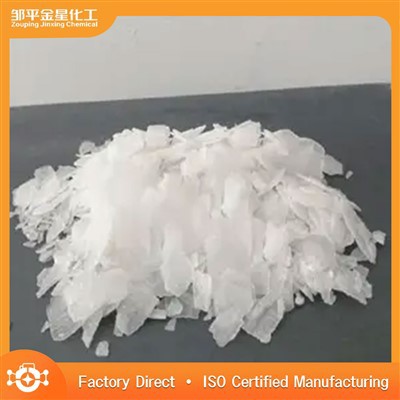
If you’ve ever worked with magnesium sulfate—whether in agriculture, water treatment, pharmaceuticals, or industrial processes—you might have found yourself wondering about its specific heat capacity. As a magnesium sulfate supplier, I get this question all the time, and for good reason: specific heat capacity is a core property that affects how you design and optimize processes, from heating reaction vessels to drying raw materials to formulating end products. Over the years, I’ve worked with countless engineers, farm managers, and lab technicians who need this number to keep their operations running smoothly, so let’s break down exactly what magnesium sulfate’s specific heat capacity is, why it varies, and how to use this data effectively.
First, let’s start with a quick refresher on specific heat capacity for anyone who might need it. Put simply, specific heat capacity (often denoted as c or Cp) is the amount of heat energy required to raise the temperature of one gram of a substance by one degree Celsius (or one Kelvin, since the size of the degree is the same on both scales). It’s a fundamental thermophysical property that isn’t universal for a compound—small changes in its physical state, hydration level, or purity can shift the number significantly, which is why so many people are confused when they see different values cited for magnesium sulfate across sources.


Magnesium sulfate, or MgSO₄, is highly hygroscopic, meaning it readily bonds with water molecules to form hydrates. These hydrates are not just minor variations—each one has a distinct chemical structure and set of properties. That’s why the specific heat capacity of magnesium sulfate changes dramatically depending on which hydrate you’re working with. For example, the anhydrous form (no water molecules) has a different specific heat capacity than the heptahydrate (seven water molecules per MgSO₄ unit), which is the common Epsom salt most people recognize.
Let’s go through each of the key magnesium sulfate forms we supply at our company, their specific heat capacities, and what that means for your use case. First, anhydrous magnesium sulfate. Anhydrous MgSO₄ is a white, odorless powder often used as a desiccant in organic chemistry, a soil amendment in low-moisture agricultural applications, and a component in some industrial drying systems. Our Magnesium Sulfate Anhydrous product, which is 99% pure anhydrous MgSO₄, has a measured specific heat capacity of approximately 0.25 J/g·°C at 25°C. This low value makes sense for an anhydrous ionic compound; without the heat-absorbing water molecules bound in its crystal structure, it requires less energy to warm up than its hydrated counterparts. This is important if you’re heating anhydrous magnesium sulfate in a process—for example, if you’re reactivating a spent desiccant by heating it to remove trapped water, you’ll need less energy than you would for a hydrated form, which can cut down on operational costs.
Next, feed-grade magnesium sulfate. This product is specifically formulated for livestock and aquaculture, where it’s used to supplement magnesium and sulfur in animal diets, improve water quality in fish farms, and aid in the prevention of grass tetany in grazing cattle. Our Feed-grade Magnesium Sulfate is most commonly the monohydrate form—MgSO₄·H₂O—though we also supply other hydrates for specific feed formulations. Let’s focus on the monohydrate first, which is our most popular feed-grade option. Its specific heat capacity is around 0.58 J/g·°C at 25°C. The single water molecule bound in the crystal structure adds to the material’s ability to absorb heat, which means it requires more energy to warm than anhydrous MgSO₄, but less than highly hydrated forms. For feed manufacturers, this is critical when planning extrusion or pelleting processes—heating feed blends to the right temperature to ensure safety and nutritional stability, and accounting for how much heat the magnesium sulfate will absorb to avoid overheating other delicate nutrients like vitamins.
Moving on to the heptahydrate, which is arguably the most well-known magnesium sulfate hydrate. That’s MgSO₄·7H₂O, or Epsom salt, named for the salt springs in Epsom, England, where it was first discovered. Our Sulfate De Magnesium Heptahydrate (we supply this product globally, which is why we include the common French name for this hydrate) has a specific heat capacity of approximately 1.18 J/g·°C at 25°C. This is a much higher value than the anhydrous or monohydrate forms, all thanks to its seven bound water molecules. For context, water itself has a specific heat capacity of 4.18 J/g·°C, so the heptahydrate is about 28% of water’s ability to hold heat, which still makes it far more heat-absorbent than the anhydrous version. This property is why Epsom salt soaks are used for sore muscles—when the salt dissolves in water, it absorbs heat from the surrounding area, creating a cooling effect. For our customers who use the heptahydrate in thermal energy storage systems, this high specific heat capacity is a major benefit: it can store more thermal energy per unit mass than lower hydrate forms, making it ideal for off-peak energy storage applications.
Another key product we supply is industrial grade magnesium sulfate. This is a versatile material used in concrete admixtures to accelerate curing, in textile dyeing processes, in wastewater treatment to adjust pH, and as a raw material for producing other magnesium compounds. Our Industrial Grade Magnesium Sulfate is available in multiple hydrates, depending on the customer’s application. For example, if you need a form with high heat absorption for concrete curing (which requires controlled heating to speed up the process without cracking), the heptahydrate is a great choice with its 1.18 J/g·°C specific heat capacity. If you’re working on an industrial drying process where you need a material that warms quickly, our anhydrous industrial grade product’s 0.25 J/g·°C specific heat capacity is more appropriate. It’s worth noting that purity plays a role here too—our industrial grade products are tested to have a minimum of 98% purity, so the specific heat capacities I’ve cited are consistent across our stock, which is a big reason many industrial operations choose us over smaller suppliers who may have inconsistent product quality.
The last common magnesium sulfate product we offer is the monohydrate, which I briefly mentioned earlier for feed applications. Our Magnesium Sulfate Monohydrate is also widely used in the pharmaceutical industry, where it’s an ingredient in some oral magnesium supplements and topical preparations, and in the paper industry as a sizing agent. Its specific heat capacity of 0.58 J/g·°C falls right between the anhydrous and heptahydrate forms, making it a middle ground for many applications. For pharmaceutical manufacturers, this value is important when formulating tablets or creams that require controlled temperature during mixing and drying—knowing how much heat the magnesium sulfate will absorb ensures that you don’t degrade active ingredients by overheating the formulation.
Now, let’s talk about why it’s so important to get the right specific heat capacity for magnesium sulfate, beyond just academic curiosity. I’ve seen projects derailed because engineers used a generic specific heat value from a outdated textbook, not realizing that the hydrate form they were working with was different. For example, a customer once reached out to me a few years ago, saying their drying process for magnesium sulfate was using 30% more energy than planned. When we looked into it, they had ordered the heptahydrate (which requires more energy to dry its seven water molecules) but had used the anhydrous specific heat capacity in their energy calculations. Once they switched to using the heptahydrate’s specific heat data, they adjusted their process temperatures and reduced their energy use by 27%—a huge savings for their operation.
Another common mistake is not accounting for temperature dependence. The specific heat capacities I’ve cited are at 25°C (room temperature), but they do change slightly as temperature rises. For example, the anhydrous form’s Cp increases to about 0.30 J/g·°C at 100°C, while the heptahydrate’s Cp increases to roughly 1.35 J/g·°C at the same temperature. If you’re working with high-temperature processes, you’ll want to use temperature-specific values instead of room-temperature ones, which is why working with a reliable supplier like ours is helpful—we can provide technical data sheets with temperature-dependent properties for each magnesium sulfate product we sell.
It’s also important to note that these values are for solid magnesium sulfate. When magnesium sulfate dissolves in water, its specific heat capacity changes entirely—for example, a 10% by weight magnesium sulfate solution has a specific heat capacity of about 3.9 J/g·°C, close to pure water. But this is a different property; when people ask for the specific heat capacity of magnesium sulfate, they almost always mean the solid form, so that’s what I’ve focused on here.
As a supplier, I’ve made it a priority to educate our customers on these properties, not just sell them a product. Too often, companies treat raw materials as interchangeable without understanding their unique properties, which leads to avoidable issues and extra costs. That’s why we include detailed technical data for every product on our website, including specific heat capacities for each hydrate form, as well as guidance on which product is best for different applications.
If you’re working with magnesium sulfate and still have questions about specific heat capacity, or you’re looking to source a high-quality product for your operation, we’re here to help. Our team of chemists and process engineers has years of experience working with all forms of magnesium sulfate, and we can provide customized technical advice based on your specific application. Whether you need anhydrous, feed-grade, heptahydrate, industrial grade, monohydrate, or another form of magnesium sulfate, we have the stock and expertise to meet your needs. Feel free to reach out to our team to discuss your requirements and get a quote tailored to your project.
References
- Lide, D. R. (Ed.). (2004). CRC Handbook of Chemistry and Physics (85th ed.). CRC Press.
- National Institute of Standards and Technology (NIST). (2023). Thermophysical Properties of Magnesium Sulfate Hydrates. Retrieved from NIST Chemistry WebBook.
- ASHRAE. (2021). ASHRAE Handbook: Fundamentals. American Society of Heating, Refrigerating and Air-Conditioning Engineers.
- World Health Organization (WHO). (2019). Magnesium Compounds in Drinking-Water. WHO Press.