If you’ve ever worked with boric acid—whether in a lab, a fertilizer mix, a home first-aid kit, or a garden pest control spray—you’ve likely wondered about its physical properties, and chief among them is its melting point. As a boric acid supplier with years of experience working with this versatile compound, I’ve fielded countless questions about this exact number, and I’m here to break down what that melting point actually means, why it varies a little depending on the grade, and how that property impacts how you use boric acid in your work.


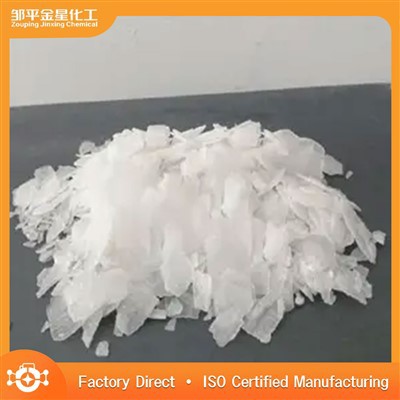
First, let’s start with the basics to set the stage. Boric acid, with the chemical formula H₃BO₃, is a weak, monobasic Lewis acid made up of boron, hydrogen, and oxygen. It forms soft, white crystalline powder or small, shiny flakes that feel slightly greasy to the touch—this “greasy” texture is a result of its layered molecular structure, where individual H₃BO₃ molecules stack in flat sheets held together by weak hydrogen bonds. That molecular arrangement isn’t just a fun fact; it directly affects its melting point, because weak interlayer bonds mean the solid can transition to a liquid state more easily than if the molecules were locked in a rigid, tightly bound structure.
Now, the big question: what is the melting point of boric acid? The short answer is roughly 170.9°C (339.6°F). But here’s where it gets a little nuanced, and it’s important to note that this number is not a hard, one-size-fits-all figure. In practice, when you heat solid boric acid, it doesn’t just melt cleanly into a uniform liquid at that exact temperature. Instead, it undergoes a two-step thermal decomposition process that overlaps with what might be mistaken for melting—this is a key point that many casual references miss, and it’s something we see in our own quality testing labs every day.
When you heat boric acid from room temperature, the first thing that happens is that it starts to lose water molecules (dehydrate) as it approaches 100°C, but the transition to a more obvious phase change starts around 160–170°C. At roughly 170°C, the solid begins to soften and form a cloudy, viscous liquid—this is where the partial melting and initial dehydration overlap. By the time you hit 180°C, most of the solid has transformed into a liquid, but that liquid isn’t pure H₃BO₃ anymore; it’s a mix of remaining boric acid and its dehydration product, metaboric acid (HBO₂), which forms when one molecule of H₃BO₃ loses one molecule of water. If you keep heating past 200°C, it will continue to lose water, turning into tetraboric acid (H₂B₄O₇), and eventually boric oxide (B₂O₃) at temperatures above 500°C. This is why technical sources often cite a range for boric acid’s melting point rather than a single number—this overlap of melting and initial dehydration is a key physical property of the compound.
This brings us to why the grade of boric acid matters, and why that can shift observed melting points slightly. Boric acid is produced to meet different standards for different applications, and each grade has minor differences in purity, particle size, and crystal structure that can impact how it behaves when heated. Let’s walk through the grades we supply at our facility, and how their melting-related properties align with their intended uses.
First, our Agricultural-grade Boric Acid is one of our most popular products, used by farmers and lawn care professionals to correct boron deficiencies in soil. Boron is an essential micronutrient for plants—it supports cell wall formation, pollen growth, and fruit development, so a deficiency can lead to stunted growth, hollow fruit, or dead leaf tips. Agricultural-grade boric acid is processed to be high in boron content (typically 17.5% boron by weight) and to dissolve easily in water, which makes it ideal for foliar sprays or soil amendments. Because it’s designed to mix with water and soil rather than undergo high-heat processing, its melting point falls right around the 170–175°C range we discussed earlier, with a slightly broader range because it has a tiny amount of residual processing salts that don’t impact its agricultural performance. If you work in farming or horticulture, you can learn more about this grade and its specifications here: [Agricultural-grade Boric Acid].
Next, our Pharmaceutical-grade Boric Acid is produced to meet strict pharmacopeial standards, like those set by the USP (United States Pharmacopeia) or EP (European Pharmacopoeia), so it has a purity of 99.5% or higher, with almost no trace contaminants. This grade is used in over-the-counter first-aid products, like eye washes, antiseptic solutions, and dusting powders for minor cuts or rashes, as well as in some pharmaceutical formulations. Because of its ultra-high purity, the melting point of pharmaceutical-grade boric acid is very consistent, hovering right at the 170.9°C benchmark with almost no overlap from residual salts. When working with this grade for lab or manufacturing purposes, it’s critical to know this exact melting point to ensure you’re processing it at the right temperature without introducing impurities from overheating. You can explore the specifications and uses of pharmaceutical-grade boric acid here: [Pharmaceutical-grade Boric Acid].
For labs and research facilities, we offer Reagent-grade Boric Acid, which is even more pure than pharmaceutical-grade, with a purity of 99.9% or higher and precise limits on trace metals and other impurities. This grade is used in analytical chemistry, buffer solutions, and scientific experiments where even tiny amounts of contaminants can skew results. Reagent-grade boric acid has the sharpest melting point range of all our grades, because its uniform crystal structure and lack of impurities mean it transitions from solid to liquid very close to the theoretical 170.9°C value, with almost no sign of decomposition before that temperature. Many researchers rely on this grade when they need a consistent, well-characterized physical property for their work, so knowing its exact melting point is key for protocol adherence. Learn more about reagent-grade boric acid and its lab applications here: [Reagent-grade Boric Acid].
Finally, our Boric Crystals product is exactly what it sounds like: large, well-formed boric acid crystals, perfect for hobbyist projects, educational demonstrations, or uses where a larger particle size is preferred over a fine powder. These crystals are grown in controlled conditions to create uniform, clear structures rather than the standard fine powder, and their melting point is almost identical to the base range of the compound, with a tiny shift to ~172°C because of their larger crystal size. This makes them popular for things like crystal growing activities in schools, or decorative uses where the appearance of the solid is as important as its physical properties. You can check out our boric crystals collection here: [Boric Crystals].
Now, you might be wondering why this melting point even matters in the first place, beyond a general science fact. For manufacturers, knowing the melting and decomposition temperature of boric acid is critical for processes like glass manufacturing, where boric acid is used to make borosilicate glass (the heat-resistant glass used in labware and kitchen Pyrex). In that process, boric acid decomposes to boric oxide, which lowers the melting point of silica and creates a glass that’s more resistant to thermal shock. If you heated boric acid beyond its decomposition temperature too quickly, you could end up with inconsistent glass quality, or even unwanted byproducts that weaken the final product. For pest control applications, like using boric acid to kill cockroaches or ants, its melting point is less critical, but understanding that it doesn’t melt until relatively high temperatures means it can be applied as a dry powder that remains stable on surfaces for long periods without breaking down.
As someone who’s worked with boric acid for over a decade, I’ve seen firsthand how a small detail like melting point can impact a whole process. A farmer using the wrong grade might apply a product that doesn’t dissolve properly, while a lab researcher might get skewed buffer results if their reagent-grade boric acid has a lower melting point indicating impurities. That’s why we make sure to provide detailed product sheets for every grade we sell, including melting point ranges, purity levels, and intended uses, so our customers can pick exactly what they need for their project.
If you’re a buyer looking to incorporate boric acid into your products, or you’re just curious about the best grade for your needs, we’re here to help. Whether you need a bulk shipment of agricultural-grade boric acid for a farm operation, small quantities of reagent-grade boric acid for a research lab, or specialty boric crystals for a project, our team can walk you through specifications, pricing, and delivery options tailored to your timeline and requirements. Reach out to our team to discuss your boric acid needs and get a quote that works for you.
References:
- Lide, D.R. (Ed.). (2004). CRC Handbook of Chemistry and Physics (85th ed.). CRC Press.
- United States Pharmacopeia Convention. (2023). The United States Pharmacopeia-National Formulary (USP 46-NF 41).
- World Health Organization. (1998). Environmental Health Criteria 204: Boron. World Health Organization Press.
- National Fertilizer and Environmental Research Center. (2019). Technical Report on Micronutrient Fertilizers: Boron. U.S. Department of Agriculture.