Hey there! As a sodium hydroxide supplier, I often get asked about the reaction between sodium hydroxide and zinc. So, let's dive right into it and explore this fascinating chemical reaction.
First off, sodium hydroxide (NaOH), also known as caustic soda, is a strong base. It's widely used in various industries, from water treatment to soap making. On the other hand, zinc (Zn) is a metal that has many applications, such as in galvanizing to prevent corrosion.
When sodium hydroxide reacts with zinc, a chemical reaction takes place. The reaction can be represented by the following equation:
Zn + 2NaOH + 2H₂O → Na₂[Zn(OH)₄] + H₂
In this reaction, zinc reacts with sodium hydroxide and water to form sodium zincate (Na₂[Zn(OH)₄]) and hydrogen gas (H₂). This is a classic example of a metal reacting with a base to produce a salt and hydrogen.
Let's break down what's happening step by step. When zinc comes into contact with sodium hydroxide solution, the zinc atoms lose electrons and are oxidized. The hydroxide ions from the sodium hydroxide react with the zinc ions to form the zincate complex. At the same time, hydrogen gas is evolved as a by - product.
The reaction is exothermic, which means it releases heat. You might notice that the solution gets warmer during the reaction. This heat release is due to the energy changes associated with the formation of new chemical bonds.
Now, let's talk about the practical implications of this reaction. In the industrial setting, this reaction can be used to produce hydrogen gas. Hydrogen is an important fuel and is used in many applications, such as in fuel cells. The sodium zincate produced can also be used in some electroplating processes.
As a sodium hydroxide supplier, I offer different grades of sodium hydroxide to meet various customer needs. We have Food Grade and Industrial Grade Caustic Soda for those who need high - quality caustic soda for food processing and industrial applications. Our Industrial Grade High - purity Fire Alkali is perfect for industries that require a high - purity form of sodium hydroxide. And if you prefer a solid form, our High Purity Flake Caustic Soda is a great option.
The reaction rate between sodium hydroxide and zinc can be affected by several factors. Temperature plays a significant role. Higher temperatures generally increase the reaction rate because the molecules have more kinetic energy, which leads to more frequent and energetic collisions between the reactant particles. The concentration of the sodium hydroxide solution also matters. A higher concentration of sodium hydroxide will result in a faster reaction.
Another factor is the surface area of the zinc. If the zinc is in a powdered form, it has a larger surface area compared to a solid block. This means that more zinc atoms are exposed to the sodium hydroxide solution, leading to a faster reaction.
Safety is always a top priority when dealing with sodium hydroxide. It is a highly corrosive substance and can cause severe burns if it comes into contact with the skin or eyes. When handling sodium hydroxide, it's essential to wear appropriate protective equipment, such as gloves and goggles.


If you're planning to carry out the reaction between sodium hydroxide and zinc in a laboratory or industrial setting, make sure to follow all safety protocols. Also, ensure proper ventilation to prevent the build - up of hydrogen gas, which is flammable.
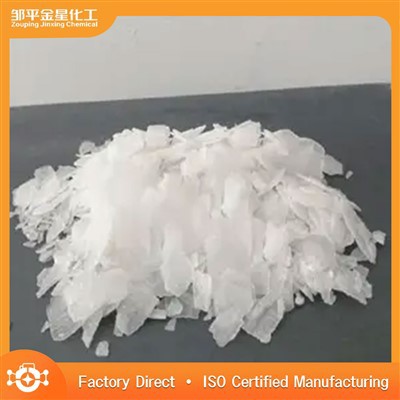
In addition to the reaction itself, the properties of sodium hydroxide and zinc are also worth considering. Sodium hydroxide is a white, crystalline solid that is highly soluble in water. It has a strong alkaline taste and can react with acids to form salts and water. Zinc, on the other hand, is a bluish - white metal that is relatively soft and malleable.
The reaction between sodium hydroxide and zinc is not only important from a chemical perspective but also has practical applications in various industries. Whether you're looking to produce hydrogen gas or use the sodium zincate in electroplating, understanding this reaction is crucial.
As a sodium hydroxide supplier, I'm here to help you with all your sodium hydroxide needs. Whether you're a small - scale laboratory or a large industrial facility, we can provide you with the right grade and quantity of sodium hydroxide.
If you're interested in purchasing sodium hydroxide for your business, feel free to reach out to us. We'll be more than happy to discuss your requirements and provide you with a quote. You can explore our different product offerings on our website and see which one suits your needs best.
In conclusion, the reaction between sodium hydroxide and zinc is a fascinating chemical process with many practical applications. It's important to understand the reaction mechanism, the factors that affect it, and the safety precautions associated with it. If you have any questions about sodium hydroxide or the reaction with zinc, don't hesitate to contact us. We're here to assist you in making the most of this chemical reaction for your business.
References
- Brown, T. L., LeMay, H. E., & Bursten, B. E. (2006). Chemistry: The Central Science. Pearson Prentice Hall.
- Petrucci, R. H., Herring, F. G., Madura, J. D., & Bissonnette, C. (2011). General Chemistry: Principles and Modern Applications. Pearson Canada.