Hey there, if you’ve ever dabbled in water treatment, agriculture, or industrial chemistry, you’ve probably crossed paths with magnesium sulfate (yes, the stuff commonly called Epsom salt, but way more versatile beyond bath bombs). As someone who’s been supplying magnesium sulfate products for years, I get asked a lot: how does magnesium sulfate actually interact with calcium? It’s not as straightforward as mixing two powders and watching a reaction—there’s a whole lot going on, depending on factors like concentration, pH, and which form of magnesium sulfate you’re using. Let’s break this down like we’re chatting over a coffee (no stuffy jargon, promise).
First, let’s do a quick refresher on the basics. Magnesium sulfate (MgSO₄) is an inorganic salt made of magnesium ions (Mg²⁺) and sulfate ions (SO₄²⁻). Calcium is another divalent cation (Ca²⁺) that’s super common in water, soil, industrial processes—you name it. When these two are in the same solution, the first thing people worry about is precipitation, right? Wait, but do Mg²⁺ and SO₄²⁻ react with Ca²⁺ directly? No, not exactly. The big player here is sulfate pairing with calcium to form calcium sulfate (CaSO₄), but that’s where it gets nuanced.
Let’s start with water treatment, since that’s a huge use case for our products. Hard water, which has high calcium and magnesium levels, can cause scale buildup on pipes, boilers, and even household appliances. Here’s where magnesium sulfate comes in. If you add magnesium sulfate to hard water, the Mg²⁺ ions will compete with Ca²⁺ for binding sites on things like carbonate ions (CO₃²⁻) or even the surfaces of pipes. Wait, why does that matter? Because calcium carbonate (CaCO₃) is the main component of hard water scale. If Mg²⁺ is hogging those binding sites, less CaCO₃ precipitates out as scale. Instead, you might form magnesium carbonate, which is way more soluble and doesn’t leave that crud on your pipes. That’s a win for industrial facilities that deal with boiler efficiency—scale buildup can drop heat transfer by up to 20%, so anything that fights that is a big deal.
But here’s a catch: if the sulfate concentration is really high, like in some industrial wastewater, Ca²⁺ can pair with SO₄²⁻ from magnesium sulfate to form calcium sulfate dihydrate, also called gypsum. Gypsum is a slightly soluble salt. How soluble is it? Roughly 2.4 g per 100 mL of water at room temp—so it’s not super soluble, but not insoluble either. So if you have very high calcium and high magnesium sulfate, you might get gypsum precipitation. When does that happen? Usually when the molar ratio of Ca²⁺ to SO₄²⁻ is close to 1:1, and the pH is neutral to slightly alkaline. For context, our Sulfate De Magnesium Heptahydrate (that’s heptahydrate, right—7 water molecules per MgSO₄ unit) is super common in water treatment because it dissolves quickly and gives a high sulfate concentration without a lot of extra impurities. We sell a ton of that for boiler water conditioning specifically because it hits that sweet spot where it inhibits CaCO₃ scale without leading to too much gypsum unless concentrations get out of hand.
Now let’s switch gears to agriculture—another massive market for magnesium sulfate. Farmers and gardeners use magnesium sulfate to fix magnesium deficiencies in soil, since magnesium is a core part of chlorophyll. But how does that interact with calcium in soil? Soil has lots of cations floating around, and they stick to negatively charged soil particles (that’s cation exchange capacity, CEC, if you want the science term). Mg²⁺ and Ca²⁺ both compete for those CEC sites. Wait, does that mean adding magnesium sulfate will mess up calcium uptake in plants? Not exactly—studies show that the ratio matters way more than just adding one or the other. Most plants need a Mg:Ca ratio of around 1:7 to 1:10 for optimal growth. If you add too much magnesium sulfate without enough calcium, you can get “calcium lockup,” where plants can’t take up calcium even if it’s present in the soil. That’s a problem for things like tomatoes, where blossom end rot is caused by low calcium uptake. On the flip side, if you balance the two, magnesium sulfate actually helps plants use calcium better because magnesium is a cofactor for many enzymes that regulate calcium transport in cells. That’s why we offer Feed-grade Magnesium Sulfate for agricultural use—it’s purified to avoid extra salts that might mess with that Mg:Ca balance, and farmers love it because it’s easy to apply via foliar sprays or soil amendments.
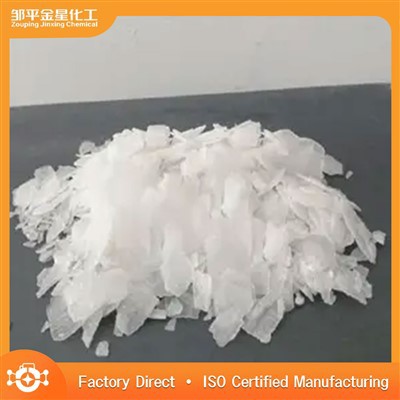
Wait, let’s talk about different forms of magnesium sulfate because that changes the interaction too. Not all MgSO₄ is the same. There’s the heptahydrate I mentioned earlier (the Epsom salt stuff, white crystals), then Magnesium Sulfate Monohydrate, which has 1 water molecule, so it’s more concentrated in terms of pure MgSO₄ per weight. There’s also Magnesium Sulfate Anhydrous (zero water, super dense) which is popular for industrial uses where you don’t want extra water adding bulk. And Industrial Grade Magnesium Sulfate for things like concrete additive or wastewater treatment, where purity specs are strict but not as tight as food/feed. How do these forms interact differently with calcium? Let’s see: anhydrous dissolves slower, right? So if you add it to hard water, it releases Mg²⁺ and SO₄²⁻ more gradually, which can prevent sudden shifts in ion ratios that might cause temporary gypsum precipitation. Heptahydrate dissolves fast, so it’s better for quick magnesium boosts in soil or immediate water treatment scale control. Monohydrate is a middle ground, higher concentration so you need less product to hit the same Mg level, which is good for bulk industrial applications.
Another area where this interaction matters is in concrete. Wait, concrete has calcium (from cement, which is mostly calcium silicate) and sometimes people add magnesium sulfate as an accelerator or to adjust setting time. What happens there? If you add too much magnesium sulfate, the SO₄²⁻ ions can react with calcium hydroxide (Ca(OH)₂) from cement hydration to form gypsum, then that gypsum can react with aluminate phases in cement to form ettringite. Ettringite is a needle-like crystal that can expand, which is bad because it cracks concrete. So in concrete applications, you have to control the amount of magnesium sulfate—too little, and you don’t get the setting adjustment; too much, and you get expansion and damage. That’s why our industrial grade magnesium sulfate is tested for consistent purity levels, so construction companies can dose it accurately without overdoing it. I’ve had a few concrete clients call me panicking because they added a cheap unpurified magnesium sulfate that had extra sulfate, leading to ettringite issues. Moral of the story: source your MgSO₄ from a reliable supplier, not some random bulk site.
Let’s get into the science a bit more, but keep it casual. The interaction between magnesium sulfate and calcium is all about ion exchange and solubility products. Solubility product (Ksp) is a number that tells you how much of a salt will dissolve in water. For CaSO₄·2H₂O (gypsum), Ksp is about 4.93 × 10⁻⁵ at 25°C. For MgSO₄, Ksp is way higher—like 7.38 × 10⁻³, so it’s way more soluble. That means when you mix MgSO₄ and Ca in solution, the sulfate is more likely to pair with Ca only when there’s a lot of both, because MgSO₄ stays dissolved easier. If you have a solution with equal moles of Mg²⁺, Ca²⁺, and SO₄²⁻, the MgSO₄ stays in solution, and only a small amount of CaSO₄ precipitates. But if you crank up the SO₄²⁻ by adding more magnesium sulfate, then you hit the point where CaSO₄ exceeds its Ksp, and precipitates out. That’s the chemical reason behind what I was talking about earlier—no magic, just numbers.
I should also mention pH, because that’s a big factor people overlook. If the solution is acidic (low pH), that affects both Mg and Ca. In very acidic water, H⁺ ions will bind with SO₄²⁻ to form bisulfate (HSO₄⁻), which means there’s less free sulfate to pair with Ca, so less gypsum precipitation. But in basic conditions (high pH), OH⁻ ions can react with Mg²⁺ to form magnesium hydroxide (Mg(OH)₂), which is slightly soluble. Wait, so does that compete with Ca for OH⁻? Yeah, a little. If pH is above 8, adding magnesium sulfate might lead to Mg(OH)₂ forming instead of CaSO₄, so less gypsum. That’s why in wastewater treatment, adjusting pH along with magnesium sulfate dose is key—our customers often work with our tech team to figure out the right balance based on their specific water chemistry, not just a one-size-fits-all dose.
Let’s talk real-world examples because that’s what matters. Last year, I worked with a food processing plant that had a hard water issue in their cooling towers. They were getting thick scale that was reducing their tower efficiency by 15%. We suggested they switch from their current scale inhibitor (which was expensive and only worked 50% of the time) to our heptahydrate magnesium sulfate. We tested their water, saw Ca levels were around 120 ppm, Mg was 20 ppm, so we adjusted their dose to add 80 ppm of Mg from our product. Within two weeks, their scale buildup was gone, and their tower efficiency jumped back up to 92%. No gypsum issues because we kept the sulfate level below the threshold where CaSO₄ would precipitate. That’s the kind of practical impact understanding this interaction has.
Another example: a tomato farmer in California was having blossom end rot because his soil had high calcium but low magnesium, and the ratio was off. He was adding calcium fertilizer but it wasn’t working. We recommended he use our feed-grade magnesium sulfate (since it’s purified without extra sodium or potassium that mess with CEC) at a rate of 10 lbs per 1,000 sq ft, along with a calcium product. After two months, his blossom end rot rate dropped from 22% to 4%. The key here was balancing Mg and Ca so the plants could actually take up the calcium. That’s way better than just dumping more calcium on the soil—you have to get the magnesium right too.
Now, let’s wrap this up so it’s not too long (you’ve probably got better things to do than read a novel, right?). The main takeaway: magnesium sulfate interacts with calcium through ion competition, solubility, and pH, and the outcome depends on which form of magnesium sulfate you use, the concentrations of each ion, and the environment (water, soil, concrete). It can fight scale in water, help balance nutrient uptake in agriculture, or adjust concrete setting time—if you use it correctly.


If you’re dealing with hard water scale, looking to adjust soil nutrient ratios, or need a reliable magnesium sulfate source for industrial processes, we can help. We offer all the forms we talked about—heptahydrate, monohydrate, anhydrous, feed-grade, industrial-grade—and we can work with you to test your specific system and find the right dose to get the results you need. No generic advice, just tailored solutions from someone who’s been in this game long enough to know what works.
If you want to connect for more details, feel free to reach out. We’re here to help.
References
- Adey, W. H., & Adey, A. L. (1993). Dynamic aquaria: Building living ecosystems. Academic Press.
- Barak, P., & Peterson, L. A. (1984). Cation exchange relationships in soil. Soil Science Society of America Journal, 48(5), 1012-1016.
- Chapman, H. D. (1965). Cation-exchange capacity. In C. A. Black (Ed.), Methods of soil analysis (Part 2, pp. 891-901). American Society of Agronomy.
- Nesse, W. J. (2000). Introduction to mineralogy. Oxford University Press.
- Taylor, H. F. W. (1997). Cement chemistry (2nd ed.). Thomas Telford.